
Welding Consumables Every Workshop Needs

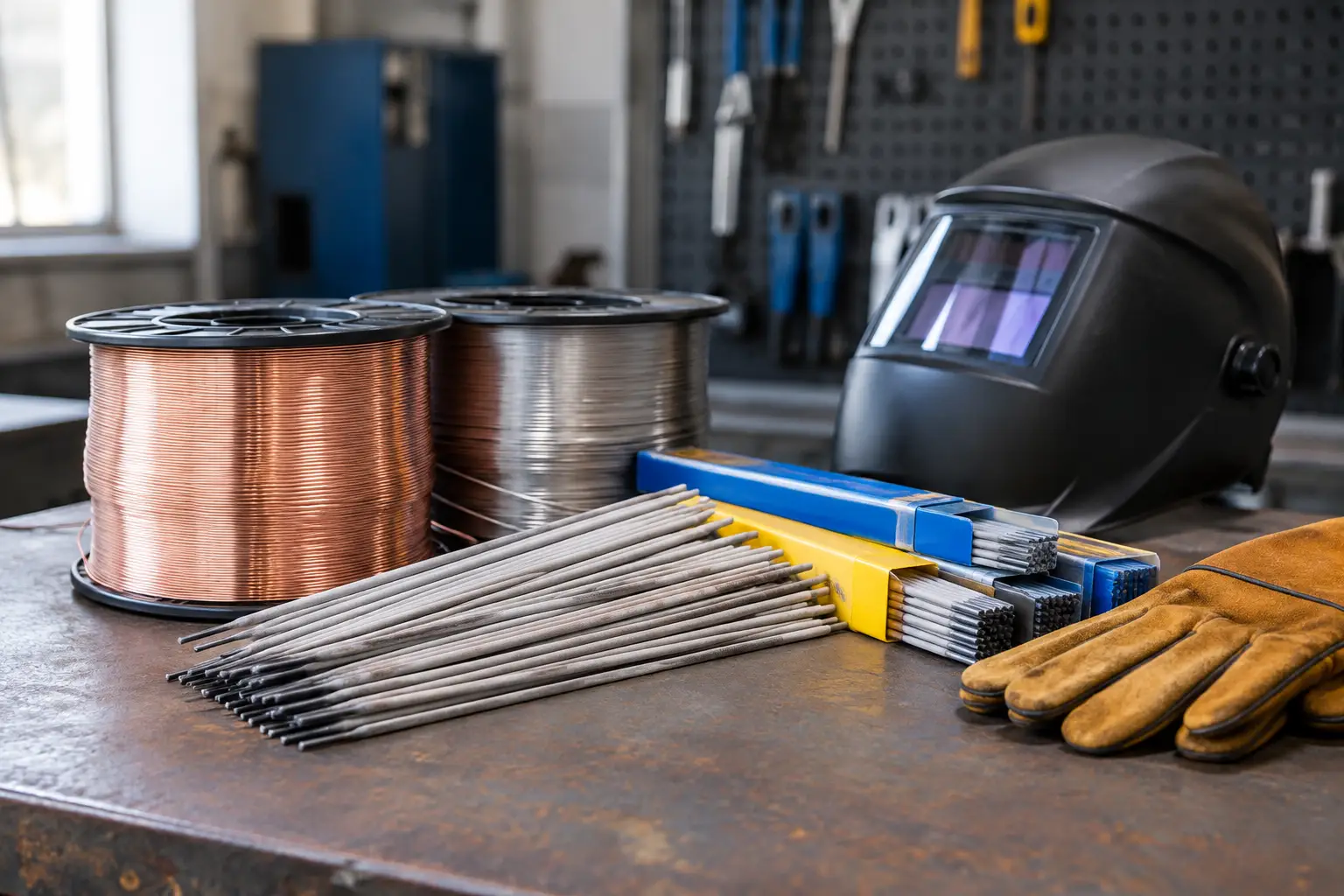
A machine can be ready for work, the job can be on the bench and the fitter can be waiting – but without the right wire, tips, electrodes or gas, production stops. The welding consumables every workshop needs are not just the obvious items; they are the parts that keep arc quality consistent, protect welders and prevent a small shortage from becoming a missed deadline.
For a busy fabrication shop, maintenance department or training bay, buying consumables purely on unit price is usually false economy. The correct product, matched to the material, process and machine, reduces rework, saves set-up time and gives operators a weld they can rely on. Here is what should be on the shelf.
Welding consumables every workshop should stock
MIG wire and the parts that feed it
MIG is the workhorse process in many UK workshops, so wire stock deserves proper planning. Mild steel solid wire such as ER70S-6 is the everyday choice for clean and lightly oxidised steel, while flux-cored wire can be a practical option for outdoor repairs or thicker material where wind protection is difficult. Stainless and aluminium work require dedicated wire grades and should never be treated as an afterthought.
The wire diameter matters as much as the grade. Fine automotive and sheet-metal work often suits 0.6 mm or 0.8 mm wire, whereas heavier fabrication may call for 1.0 mm or 1.2 mm. Stocking every size is unnecessary for a small workshop, but keeping the diameters that match your regular work prevents rushed substitutions and poor feeding.
A reel of wire alone will not keep a MIG set running. Contact tips wear, especially when operators run high amperage work or use long duty cycles. Keep the correct tip size for each wire diameter, plus gas nozzles, tip holders, diffusers and replacement liners. A worn liner can cause bird-nesting and erratic wire feed that looks like a machine fault but is often solved with a straightforward service part.
Anti-spatter spray, nozzle gel and weld-through primer also earn their place on the consumables rack. They are low-cost items that speed up cleaning and help protect fixtures, nozzles and surrounding surfaces. Use them sensibly, particularly where paint or coating specifications apply.
TIG tungstens, filler rods and torch spares
TIG welding rewards preparation and punishes poor consumable choice. Tungsten selection needs to suit the job: modern lanthanated tungstens are a versatile choice for many AC and DC applications, while the diameter must match the amperage range. A tungsten that is too small overheats; one that is too large can make low-current control less precise.
Keep tungstens clean, clearly separated by type and protected from damage. Contaminated electrodes are a quick route to an unstable arc, poor weld appearance and wasted time re-grinding. A dedicated tungsten grinder is worthwhile in regular TIG work because it produces a consistent point without contaminating the electrode.
Filler rod should be chosen for the parent material and service conditions, not simply because it is already in the rack. Mild steel, stainless, aluminium, bronze and specialist alloys all require suitable grades. For stainless work, consider corrosion performance and material compatibility. For aluminium, make sure the filler supports the required strength, ductility and finish.
A TIG torch also depends on small parts that are easy to overlook: collets, collet bodies, ceramic cups, back caps and gas lenses. Gas lenses can improve shielding coverage and make a noticeable difference on stainless fabrication, thin material and awkward joint access. Stock the consumables that fit your torch series rather than mixing similar-looking parts that do not seat correctly.
Stick electrodes for site work and repair
MMA or stick welding remains essential for maintenance, structural repairs and jobs where portability matters. General-purpose rutile electrodes are a sensible workshop staple for straightforward mild steel fabrication. Basic low-hydrogen electrodes are often preferred where higher-strength joints, restrained sections or more demanding procedures are involved.
Electrode storage is not optional. Damp electrodes can introduce hydrogen and lead to weld defects, particularly in critical work. Keep unopened packs dry, use a rod oven where procedure requirements demand it, and do not leave open packets in a damp van or cold workshop. Stainless and hardfacing electrodes should be stored separately and labelled clearly to avoid costly material mix-ups.
Shielding gas and gas-handling essentials
Gas is a production consumable, even though it is frequently managed separately from the welding bench. A MIG mix suited to mild steel gives stable arc characteristics and good bead appearance, while pure argon is the standard shielding gas for TIG welding and aluminium MIG work. Specialist mixtures may be justified for stainless steel, high-production applications or a specific weld procedure.
The right regulator, flowmeter and hoses are as important as the cylinder contents. A damaged hose, leaking connection or inaccurate flow setting wastes gas and risks porosity. Check fittings regularly, protect cylinders from impact and make sure the cylinder is properly secured. If your work involves frequent cylinder changes, keeping a spare ready can prevent a job stopping halfway through a run.
Plasma cutting consumables
Plasma cutters are fast, practical and expensive to run badly. Electrodes, nozzles, shields and swirl rings wear as part of normal cutting, particularly when cutting thick plate, working with poor air quality or repeatedly piercing material. Trying to stretch a worn nozzle too far leads to a wider kerf, bevelled edges and slower cutting.
Match plasma consumables to the torch and amperage range. A nozzle designed for low-current detail work will not perform properly when pushed beyond its rating, and a high-amperage set-up can sacrifice cut quality on thin sheet. Clean, dry compressed air is equally critical. Water and oil in the air supply quickly shorten consumable life, so drainage and filtration should form part of routine workshop maintenance.
Do not overlook preparation and safety consumables
A sound weld starts before the arc is struck. Grinding discs, flap discs, cutting discs, wire brushes, marking tools and suitable cleaning products all influence fit-up and finish. Keep abrasives suited to the materials you work with, especially stainless steel, where cross-contamination from ordinary steel tooling can cause later corrosion problems.
Safety items need replenishing just as reliably as wire and tips. Welding gloves, lenses, coveralls, respirator filters, ear protection and grinding visors are working consumables. If a glove is burnt through or an auto-darkening lens cover is badly scratched, it is no longer doing its job properly. For workshops managing welding fume, replacement filters and LEV inspection schedules should be treated as operational priorities rather than paperwork.
Build stock levels around your actual workload
There is no benefit in filling a storeroom with slow-moving consumables, but running with no buffer stock creates avoidable downtime. Review what each process consumes over a typical month, then set a minimum level based on supplier lead time, job urgency and how easily the item can be substituted.
For most active workshops, it makes sense to hold a reserve of the following:
- your main MIG wire grade and diameter;
- matching contact tips, liners and nozzles;
- everyday TIG tungstens, cups, collets and filler rods;
- commonly used MMA electrodes stored correctly;
- plasma electrode and nozzle sets for each active torch;
- PPE replacements, abrasives and fume-control filters.
Label shelves by process, material and size. It sounds basic, but clear stock control stops an 0.8 mm tip being fitted to 1.0 mm wire or a stainless brush being used on carbon steel and then returned to the wrong area. Record batch numbers where traceability matters, particularly for coded fabrication, pressure work or projects governed by a welding procedure.
Buy for compatibility, not guesswork
Consumables are not universal just because the thread or shape looks familiar. Confirm torch type, part number, wire diameter, polarity, material grade and machine setting before ordering. This is especially relevant for MIG liners, plasma torch parts and TIG collets, where an almost-correct component can cause repeated problems at the bench.
A specialist supplier should be able to help match consumables to the process rather than simply sell a pack from a catalogue. Linc-Weld supports workshops with premium welding gear, practical product knowledge and the backup needed when a consumable issue is really a feed, gas or machine-performance problem.
The best consumables shelf is not the biggest one. It is the one that lets your welders pick up the right item, set up correctly and keep working without a second trip to the counter.