
Best Welding Table for Fabrication Shop Work

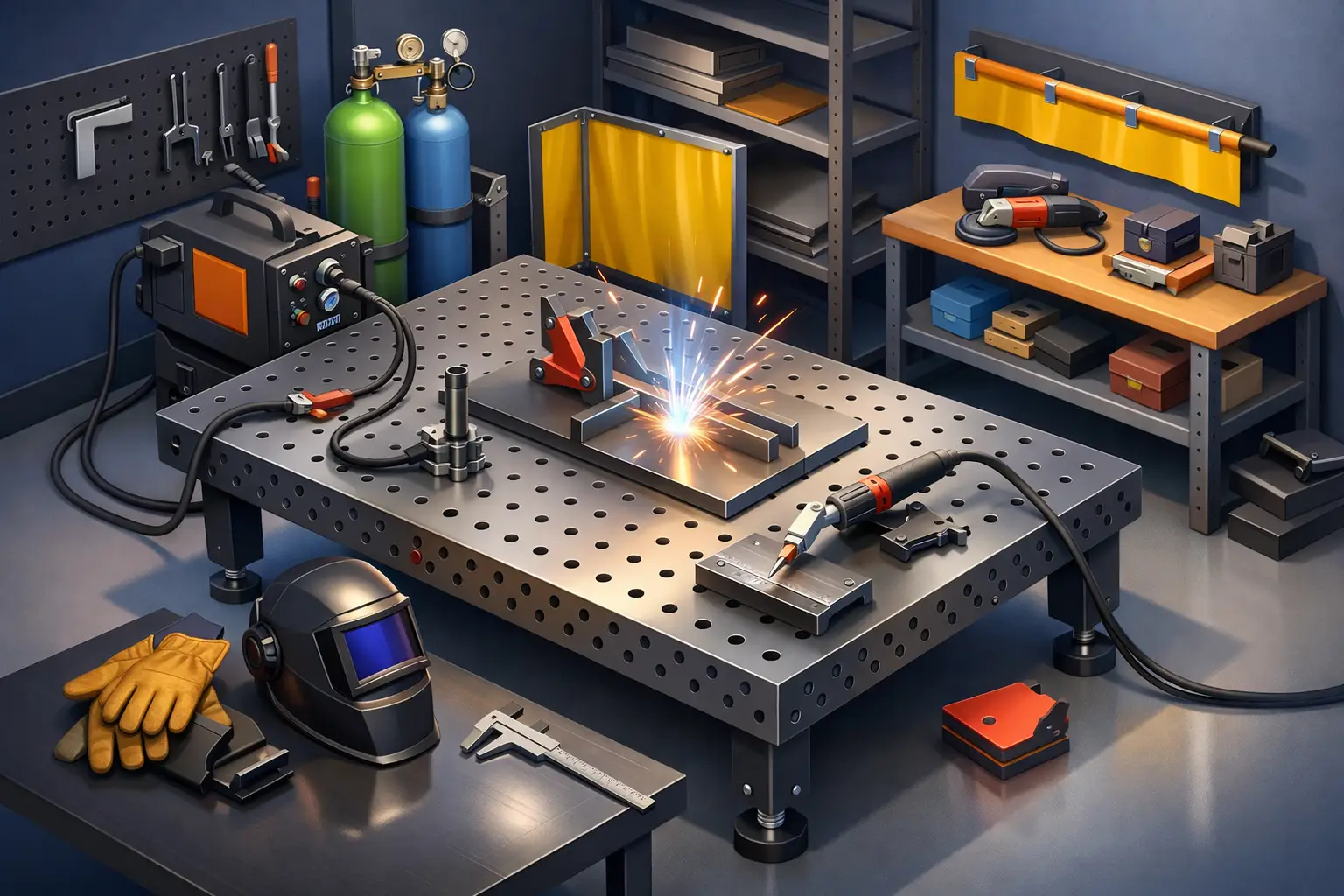
A bad table shows itself fast. Parts pull out of line, clamps never sit where you need them, and simple assembly jobs turn into a fight. If you are choosing a welding table for fabrication shop work, the right setup saves time every day, not just on the big jobs.
In a busy workshop, the table is more than a flat surface. It affects fit-up speed, weld quality, repeatability and how efficiently the team moves from tack-up to final inspection. That matters whether you are building frames, repairing plant, batching brackets or training apprentices who need a stable, accurate work area from day one.
What a welding table for fabrication shop use really needs to do
A fabrication table has one job on paper – hold work securely while you weld it. In practice, it needs to do far more. It has to stay flat under load, take heat without constant distortion, accept clamps and fixtures easily, and stand up to years of grinding dust, spatter and heavy handling.
That means the cheapest option is rarely the best value. A light bench might look fine for occasional repair work, but in a production-minded shop it soon becomes a bottleneck. If the surface flexes, if the holes are inconsistent, or if the frame racks when you drag a larger fabrication across it, accuracy suffers and labour costs creep up.
For most professional users, a proper welding table earns its keep through repeatability. When jobs need to be made twice, ten times or a hundred times, a table that supports fixtures, stops and reliable clamping is worth far more than a basic steel top on legs.
Size, thickness and load capacity
The first buying mistake is usually going too small. Fabricators often focus on the dimensions of the jobs they build, but forget about clamp clearance, torch access and room for squaring up. A table that technically fits the workpiece can still be awkward to use if every corner is crowded.
For general fabrication, a mid-sized table suits many shops because it gives enough room for day-to-day frame work, brackets, jigs and repair jobs without dominating the bay. If you regularly handle gates, structural sections or long assemblies, modular layouts or tables that can be positioned together make more sense than one oversized fixed bench.
Top thickness matters as well. A thicker plate usually offers better stability and resistance to heat movement, but it also adds weight and cost. That is a fair trade in a heavy-use environment. In lighter duty settings, especially where the table may need to be repositioned, there is a balance to strike between mass and practicality.
Load capacity should be judged honestly. Think about the heaviest fabrication you will place on the table, then add a margin. If the shop uses engine cranes, forklifts or pallet trucks to load jobs onto benches, the table frame and legs need to cope with real workshop abuse, not just brochure figures.
Flatness is where value starts to show
Flatness separates a serious fabrication table from a general workshop bench. If you are building anything that needs to sit square, line up with mating parts or hold tolerance across repeated jobs, surface accuracy matters.
A precision-machined table brings a clear advantage when you rely on fixtures and hole patterns for repeat work. It speeds up setup and reduces the amount of measuring, packing and correcting during tack-up. For coded work, production welding or higher-spec assemblies, that can justify the spend very quickly.
That said, not every shop needs the same level of precision. If the table is mainly for rough repair, cutting support or occasional fabrication, a simpler heavy-duty steel bench may do the job. The key is matching the table to the work. Paying for ultra-fine tolerance when the jobs do not require it is no smarter than underbuying for production work.
Hole patterns, fixturing and clamping options
If you are comparing tables, pay close attention to how the clamping system works. This is where a lot of the real productivity lives. A table with a consistent hole grid opens the door to stops, squares, risers, clamps and repeat setups that can slash prep time.
For fabrication shops making batches of similar parts, fixturing is a serious advantage. Instead of marking out and measuring every assembly from scratch, the table becomes part of the process. Components locate faster, apprentices make fewer mistakes, and experienced welders can move through repetitive work with less wasted motion.
The trade-off is cost. A fixturing table and the accessories to go with it are a bigger upfront spend than a plain bench. But if your shop regularly builds the same frames, supports, guards or brackets, the payback usually comes through labour savings rather than material savings.
If your work is varied and one-off, flexibility may matter more than a full modular fixture setup. In that case, look for a table that still accepts a wide range of clamps and magnets, with enough access around the frame to work from different angles.
Surface material and spatter resistance
Most welding tables for fabrication shop environments are built from steel, and for good reason. Steel gives the strength, weight and durability most workshops need. It also handles impact well and provides a familiar, dependable surface for fabrication and assembly.
Surface finish still matters. Raw steel tops are common and practical, but they need care. Spatter build-up, grinding damage and corrosion can shorten the working life of the table or affect accuracy over time. Regular cleaning and disciplined use go a long way.
Some users want plated or treated surfaces for corrosion resistance, especially in mixed-use workshops or training environments. That can be useful, but it depends on the job mix. In heavy fabrication, tables get marked, heated and abused. The best approach is often a durable steel table backed by straightforward maintenance rather than a finish that looks smart on day one but adds little in hard service.
Fixed, modular or mobile?
There is no single right answer here. A fixed table suits workshops with dedicated welding bays and repeatable workflows. It gives stability and a permanent working height, and it usually feels more planted under heavy assemblies.
A modular system suits growing fabrication shops that need flexibility. You can expand the setup, reconfigure bays, or join tables together for larger fabrications. For businesses taking on mixed work, that adaptability can be a real advantage.
Mobile tables have their place too, especially for maintenance teams, smaller workshops or areas where floor space is tight. But mobility should not come at the expense of rigidity. Castors are useful only if the frame stays solid and the locking system is reliable. In a proper fabrication environment, nobody wants a table that shifts when a weldment is being squared and clamped.
Working height, ergonomics and shop efficiency
A table that is too low slows people down and punishes their back by the end of the week. Too high, and fit-up becomes awkward, especially on heavier jobs. Working height is often overlooked because buyers focus on tops and accessories first, but the day-to-day comfort of the welder matters.
If several people use the same bench, or if the work varies from small assemblies to bulky fabrications, adjustable leg options can make sense. In other cases, a fixed height matched to the main type of work is the better choice. The point is to think about how the table fits the team, not just the spec sheet.
Good workflow matters just as much. A table should sit where extraction, power supply, gas bottle access and material handling all make sense. Buying a premium table but dropping it into a cramped corner with poor access is an expensive way to create frustration.
Buying for now versus buying for growth
A fabrication shop rarely stands still. New contracts come in, the team grows, or the type of work changes. That is why a welding table should be bought with at least some forward planning.
If the shop is mainly carrying out repairs today but is pushing towards more repeat fabrication, a table with future fixturing options is often the smarter buy. If space is limited now but a move or expansion is likely, modularity can prevent a second purchase later.
This is where proper product advice matters. A table should fit the real workload, the available floor space and the likely direction of the business. Linc-Weld works with welders and fabrication teams who need premium welding gear at the right price, backed by real support, and that same practical thinking applies to workshop essentials as much as power sources and PPE.
The best table is not the one with the longest feature list. It is the one that helps your shop turn out accurate work faster, with less rework and less hassle. Get that decision right, and every job that lands on the bench gets a little easier.