
Choosing Welding Gas Regulators That Fit

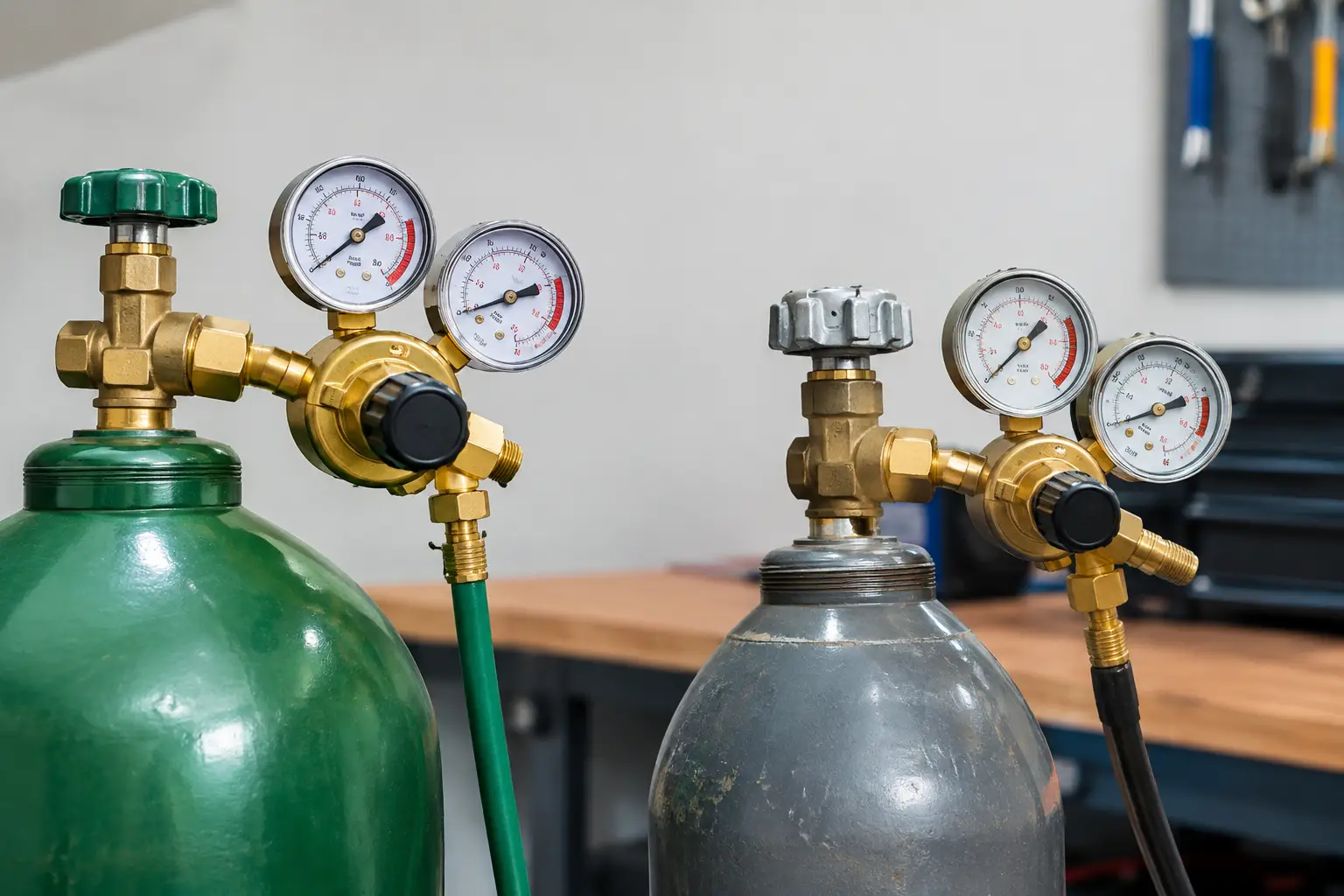
A new bottle of shielding gas can look like the simplest part of a welding setup. Connect it, set the flow, weld. In practice, welding gas regulators have a direct effect on arc stability, gas coverage, consumable life and safety. Fit the wrong regulator, use a damaged hose, or set flow by guesswork, and even a good MIG or TIG set will struggle to give consistent results.
For fabrication shops, maintenance teams and mobile welders, the right choice is not just about finding a regulator that physically screws onto the cylinder. It needs to suit the gas, the process, the cylinder connection, the required flow range and the working environment. Get those basics right and the regulator becomes the dependable, fit-and-forget part of the rig it should be.
What a welding gas regulator actually does
A full gas cylinder stores gas at very high pressure. That pressure is far too high and too variable to send straight to a torch. The regulator reduces cylinder pressure to a controlled outlet pressure, allowing the gas flow to be adjusted for welding or cutting.
Many units combine pressure reduction and flow control in one body. Others use a regulator with a separate flowmeter or flow gauge. The layout matters because pressure and flow are not the same thing. A pressure gauge may show outlet pressure in bar, while a flowmeter shows litres per minute. For most MIG and TIG shielding-gas work, litres per minute is the figure the welder needs to set.
A regulator normally includes a cylinder inlet connection, high-pressure contents gauge, outlet-pressure gauge or flow indicator, adjustment control, hose tail and safety relief provision. Higher-quality models may also offer clearer scale markings, tougher gauge protection and more stable control as cylinder pressure falls.
Match the regulator to the gas and process
Start with the gas you are using, not the welding machine. Cylinder fittings are gas-specific for a reason. An argon or argon-mix regulator for MIG and TIG work is not automatically suitable for oxygen, acetylene, propane, nitrogen or CO2 cylinders. Gas suppliers and cylinder types can also use different valve arrangements, so check the fitting requirement before ordering.
For MIG welding mild steel with argon/CO2 mix, a standard shielding-gas regulator with a flowmeter is usually the practical choice. Most workshop jobs run comfortably within a common 0-30 litres-per-minute range. Pure CO2 can require a compatible regulator and careful setup, particularly if the bottle is used heavily or in a cold workshop where flow can become less consistent.
TIG welding usually benefits from particularly accurate low-flow adjustment. Thin stainless, aluminium and small tube work may need only modest flow, while a larger gas lens cup or a drafty fabrication bay may require more. A flowmeter makes those adjustments easier to repeat than a basic outlet-pressure gauge.
Oxy-fuel work is different. Oxygen and fuel gas must use the correct dedicated regulators, with appropriate flashback arrestors and hoses. Never try to adapt a shielding-gas regulator for cutting, heating or brazing. The pressures, fittings and safety requirements are not interchangeable.
Flowmeter or pressure gauge?
For most professional MIG and TIG users, a flowmeter regulator is the more useful option. It displays the actual gas flow in litres per minute, so settings can be repeated between bays, machines and welders. It also makes fault-finding faster when a torch is hissing, a gas solenoid is sticking, or a colleague has altered the adjustment.
A twin-gauge regulator can still work well where outlet pressure is the relevant requirement or where a separate flowmeter is already fitted. It is often compact and durable, but it requires more experience to convert pressure behaviour into useful flow at the torch. For shielding gas, that can lead to unnecessary gas use or poor coverage.
Too little flow allows air into the gas shield and can leave porosity, soot or discolouration around the weld. Too much flow is not better. Excess gas creates turbulence, pulling surrounding air into the shield and wasting cylinder contents at the same time. As a starting point, many indoor MIG applications run around 10-15 litres per minute, while TIG often sits around 6-12 litres per minute. These are working ranges, not fixed rules. Torch size, joint design, material, cup size and drafts all matter.
Single-stage and two-stage regulators
A single-stage regulator reduces pressure in one step. It is the common workshop choice, cost-effective and entirely suitable for routine welding when used correctly. As the cylinder empties, outlet pressure can change slightly, so the flow may need a quick check during long production runs.
Two-stage regulators reduce pressure in two steps. They cost more, but hold a steadier outlet pressure as bottle pressure drops. That consistency is useful for critical TIG work, automated cells, long continuous welds and applications where an interruption or variation is costly.
The decision comes down to the job. A fabrication bench carrying out general MIG repairs does not always need the extra expense of a two-stage unit. A workshop producing repeatable stainless assemblies, or supplying gas to a process that runs for hours, may quickly see the value.
Check fittings, hoses and physical condition
Before fitting a regulator, inspect the cylinder valve, inlet seal, thread and regulator connection. Dirt, swarf and damaged threads have no place on a gas connection. Open the cylinder valve briefly and carefully, pointing it away from people and ignition sources, only where site procedure permits. This helps clear loose debris from the valve outlet before the regulator is fitted.
Use the correct spanner and avoid forcing a connection. Do not use PTFE tape unless the fitting design specifically calls for it. Many regulator connections seal on a face or washer, not the thread. A leak at the cylinder valve can empty a bottle surprisingly quickly and creates an avoidable safety issue.
The outlet hose should be rated for the gas and pressure involved, secured with suitable clips, and kept clear of hot work, sharp edges and vehicle routes. A cracked or softened hose is not a small defect. Replace it. Likewise, if the regulator body is heavily knocked, the gauges are cracked, the adjustment knob is damaged or a gauge needle behaves erratically, take it out of service.
Safe setup in the workshop and on site
Keep cylinders upright, secured with a proper chain or restraint, and protected from impact. Regulators are precision control equipment, not lifting handles. Never carry a cylinder by the regulator, and remove it before moving cylinders where practical.
Open the cylinder valve slowly. A sudden pressure surge can damage gauges and internal components, especially on poorly maintained equipment. Stand to one side of the regulator rather than directly in front of the gauges. Once the valve is open, adjust the required flow with gas running through the torch circuit so the setting reflects real working conditions.
Leak-test connections after installation using an approved leak-detection solution. Never use a flame. Keep oil, grease and lubricants away from oxygen equipment completely. Oxygen-enriched systems and hydrocarbons are a dangerous combination.
In enclosed spaces, remember that argon and CO2 can displace breathable air. Good ventilation and appropriate risk assessment are essential, particularly in pits, tanks, vessels and low-level areas. A regulator may be a small component, but it sits at the start of a system that demands proper control.
When replacement is the sensible option
Regulators are service items. They do not last forever, particularly in busy shops where bottles are changed daily and equipment sees site work. A creeping outlet pressure, inconsistent flow, a persistent leak, stiff adjustment, damaged gauges or a relief valve issue all justify replacement or professional assessment.
It can be tempting to keep an old regulator in service because it still appears to work. That false economy often shows up as wasted gas, porosity rework or a failed inspection at the worst time. For workshops managing several bays, keeping a tested spare regulator on the shelf reduces downtime when a fault appears mid-job.
Linc-Weld Industrial Supplies can help match regulators, flowmeters, hoses and flashback protection to the gas and process in use, rather than leaving you to piece together incompatible fittings from different suppliers.
A regulator should make the welding job quieter and more predictable: steady gas, clean starts and no surprises when the bottle is half empty. Check the fitment, set the flow at the torch, and replace questionable equipment before it costs a shift’s work.