Induction Heater for Seized Bolts: Is It Worth It?

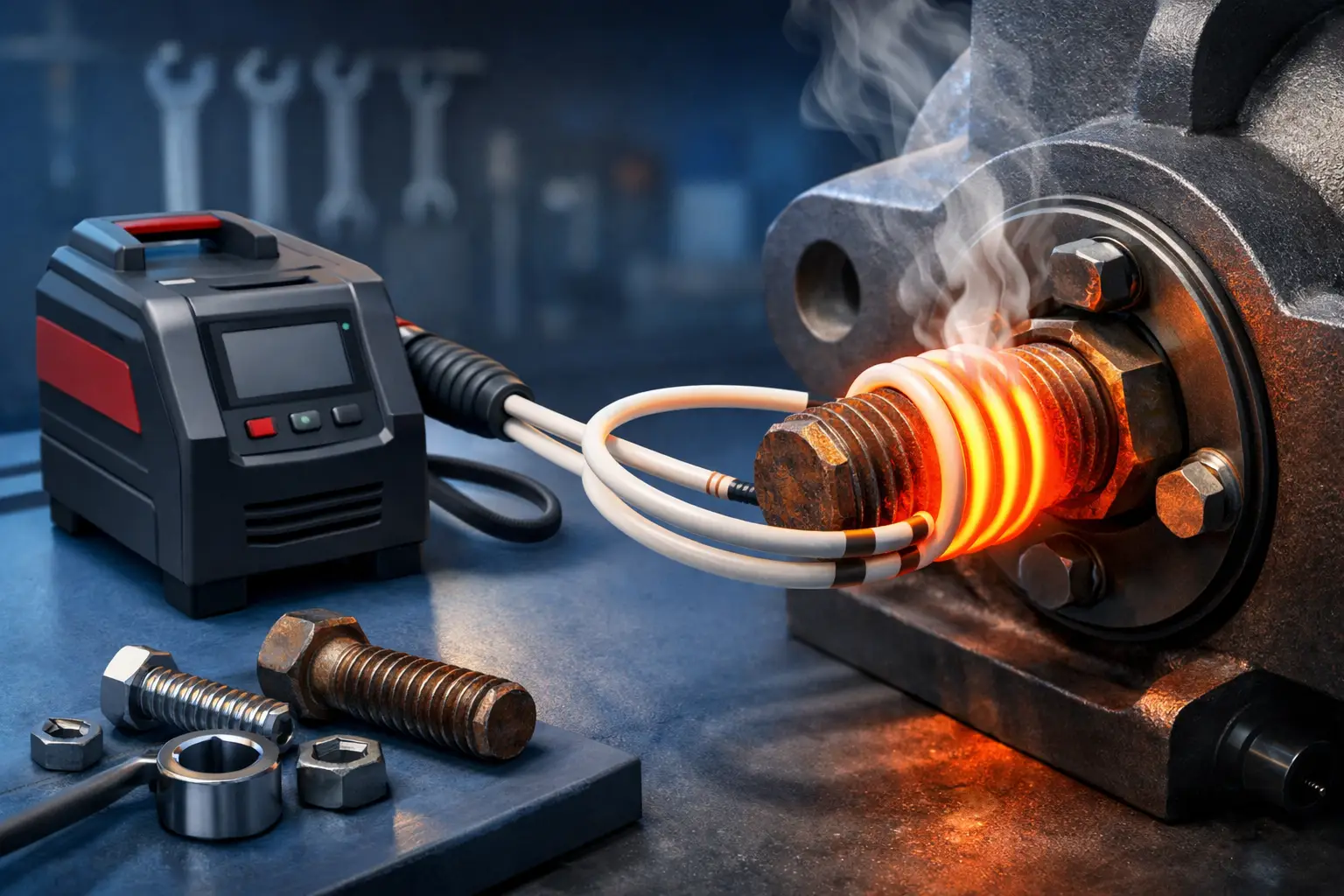
If you have ever snapped a rusted fixing halfway through a job, you already know the real cost is not the bolt – it is the time, the swearing, the drill bits, and the knock-on delay. An induction heater for seized bolts is built for exactly that problem. Instead of fighting corroded fasteners with a flame, brute force, or guesswork, it puts fast, localised heat where you need it and helps break the bond without cooking everything around it.
For workshops, plant maintenance teams, automotive repairers, and fabrication businesses, that matters. The right kit can turn a stubborn removal job from a drawn-out headache into a routine task. But it is not magic, and it is not the right answer in every situation. What matters is knowing where induction heating genuinely earns its keep.
What an induction heater for seized bolts actually does
An induction heater uses an electromagnetic field to heat ferrous metal directly. In plain terms, the bolt, nut, or surrounding metal gets hot fast without a naked flame. That heat causes expansion, helps crack corrosion, old threadlock, and years of oxidation, and gives you a better chance of removing the fastener cleanly.
The main advantage is control. With oxy-fuel or a blowtorch, heat spreads and nearby hoses, wiring, paint, bushes, seals, and trim can quickly become part of the problem. With induction, the heat zone is tighter and usually much easier to manage. That is a major selling point in modern workshops where components are packed close together and collateral damage is expensive.
It also reduces prep time in many jobs. If you do not need to drag out gas bottles, check lines, or set up flame shields, you get moving faster. For mobile engineers and busy bays, that is more than convenience – it is productivity.
Why trade users are switching from flame heating
In older-school setups, seized bolts were often dealt with using a gas torch and experience. That still has a place, especially for large sections or where broad heating is needed. But a lot of trade users are moving to induction because the work itself has changed.
Vehicles, machinery, and site equipment now have more plastics, electronics, coatings, and heat-sensitive assemblies around every fixing. A flame can still work, but the margin for error is tighter. An induction heater gives you a cleaner way to target suspension bolts, exhaust fixings, chassis hardware, hub nuts, and corroded studs without bathing the whole area in heat.
There is a safety angle too. No open flame means a lower fire risk in many jobs, especially in enclosed workshop spaces or around underbody coatings, fuel lines, and interior trim. That does not make induction heating risk-free – hot metal is still hot metal – but it does make it easier to work with confidence in the right setting.
Where induction heating works best
The best results usually come on seized nuts and bolts where corrosion is locking the threads together, or where threadlocking compound needs breaking down. Automotive repair is an obvious fit, particularly on exhausts, suspension, steering components, and subframe fixings. Agricultural and plant machinery also benefit, because outdoor exposure and long service intervals are a perfect recipe for seized hardware.
Fabrication and maintenance teams can use induction heating for disassembly work, freeing up worn parts, and heat-shrinking tasks depending on the unit and accessories. In a busy engineering environment, that wider usefulness helps justify the spend.
That said, success depends on access, material, and surrounding mass. A small seized bolt buried in a heavy casting may need more time than an exposed fixing on lighter steel. Stainless can behave differently from mild steel, and non-ferrous parts will not respond in the same way. If the fastener is already rounded, stretched, or heavily wasted by corrosion, heat helps, but it cannot restore damaged flats or threads.
Choosing an induction heater for seized bolts
If you are buying for professional use, cheap and cheerful usually becomes expensive quickly. You want a unit that is built for repeated workshop work, not occasional hobby use. Power output matters because it affects how fast the unit can bring the target up to temperature. Faster heating means less wasted time and less chance of heat drifting into places you do not want it.
Coil range matters just as much. Different bolt sizes, nuts, and awkward access points need different coil shapes and lengths. A good machine is only half the package if you cannot get the right coil around the job. For real workshop flexibility, look at what comes in the kit, how easy the coils are to swap, and how readily replacements are available.
Duty cycle is another point buyers often miss. If the machine is going to be used across multiple jobs in a busy day, it needs to handle that pace. A unit that constantly needs cooling down will frustrate the team and lose its value very quickly.
Build quality, lead length, case design, and overall portability also count. If engineers are carrying the kit around a workshop or out to site, it needs to be practical. Simple controls help too. In trade environments, no one wants to fight menus just to heat a bolt.
The trade-off: when it is worth the money
An induction heater is not the cheapest way to attack a seized fastener. Upfront cost is higher than a torch setup in many cases, so the value comes from time saved, reduced damage, and safer working.
If you are removing seized fixings every week, the numbers start to make sense quickly. One snapped manifold stud, one damaged sensor loom, or one scorched CV boot can wipe out a good chunk of the difference. Add labour savings and fewer hold-ups, and the case gets stronger.
If your jobs only occasionally involve seized hardware, it depends. A smaller workshop might still justify one because of the speed and reduced risk on higher-value jobs. On the other hand, if your work rarely involves corroded fixings or heat-sensitive surroundings, the payback may be slower.
This is where buying from a proper industrial supplier helps. You want straight answers on specification, suitability, and after-sales support, not just a low headline price. For many buyers, dependable backup is part of the product.
What to look for in day-to-day use
A good induction heater should speed up the job without adding unnecessary faff. In practice, that means fast setup, predictable heating, and accessories that stand up to workshop abuse. Coils are consumable to a point, so it is worth checking availability and replacement cost before you buy.
Operator comfort matters more than people think. A well-balanced handpiece, decent cable flexibility, and straightforward controls all make a difference when the tool is being used repeatedly. The machine should feel like workshop kit, not a fragile gadget.
It is also worth checking what support sits behind the purchase. For trade users, repairs, calibration where relevant, spares, and technical advice can matter just as much as the spec sheet. Linc-Weld Industrial Supplies Ltd works with professional users who need gear backed by real support, which is exactly the sort of backup worth having when equipment is earning its keep.
Common mistakes when using induction heating
The biggest mistake is expecting every seized fixing to release instantly. Heat is part of the process, not the whole process. Sometimes the best result comes from heating, letting the metal move, then working the fastener carefully back and forth rather than simply leaning harder on a breaker bar.
Another common mistake is overheating the area. Just because induction is more controlled than a flame does not mean you can ignore nearby components. Rubber, grease, paint, sensors, and seals still need protecting. Good access and clear sight of the work area make a big difference.
Poor coil choice also slows jobs down. If the wrong coil is used, heating becomes less efficient and more time is wasted. Matching the coil to the job is basic, but it has a direct effect on performance.
Is an induction heater for seized bolts right for your workshop?
If your team deals regularly with corroded fixings on vehicles, plant, fabrication assemblies, or maintenance work, the answer is often yes. It is one of those tools that can look like a luxury until it starts saving hours and preventing breakages. Then it becomes part of the standard kit.
For buyers comparing options, focus less on the cheapest ticket price and more on how the machine will perform over time. Output, coil selection, durability, and support are what determine value in the real world. A reliable induction heater earns its place by getting difficult jobs done faster, cleaner, and with less risk to surrounding parts.
The best buying decision is usually the one that matches the pace and type of work you actually do. If seized bolts are a regular nuisance in your workshop, a proper induction heater is not just easier – it is often the more profitable way to work.
When a fixing refuses to move, the right heat in the right place can save the job before it turns into a much bigger repair.