Welding Machine Spare Parts That Keep You Running

When a set goes down mid-job, nobody cares about theory. They care about getting it sorted, getting the arc back, and avoiding a day lost to a £20 part. That is why welding machine spare parts matter far more than most buyers realise. The right part, fitted at the right time, keeps production moving. The wrong one can leave you chasing faults, burning through consumables, or sending a machine out for repair that could have stayed on the bench.
For busy fabrication shops, site teams, maintenance departments and colleges, spare parts are not an afterthought. They are part of the running cost of welding equipment, just like wire, gas, torches and PPE. If you treat them that way, you spend less time firefighting and more time welding.
Which welding machine spare parts actually matter?
Not every part fails at the same rate, and not every machine has the same weak points. A compact inverter MIG in a small workshop sees different wear from a heavy-duty industrial TIG set running hard across multiple shifts. Still, some parts come up again and again.
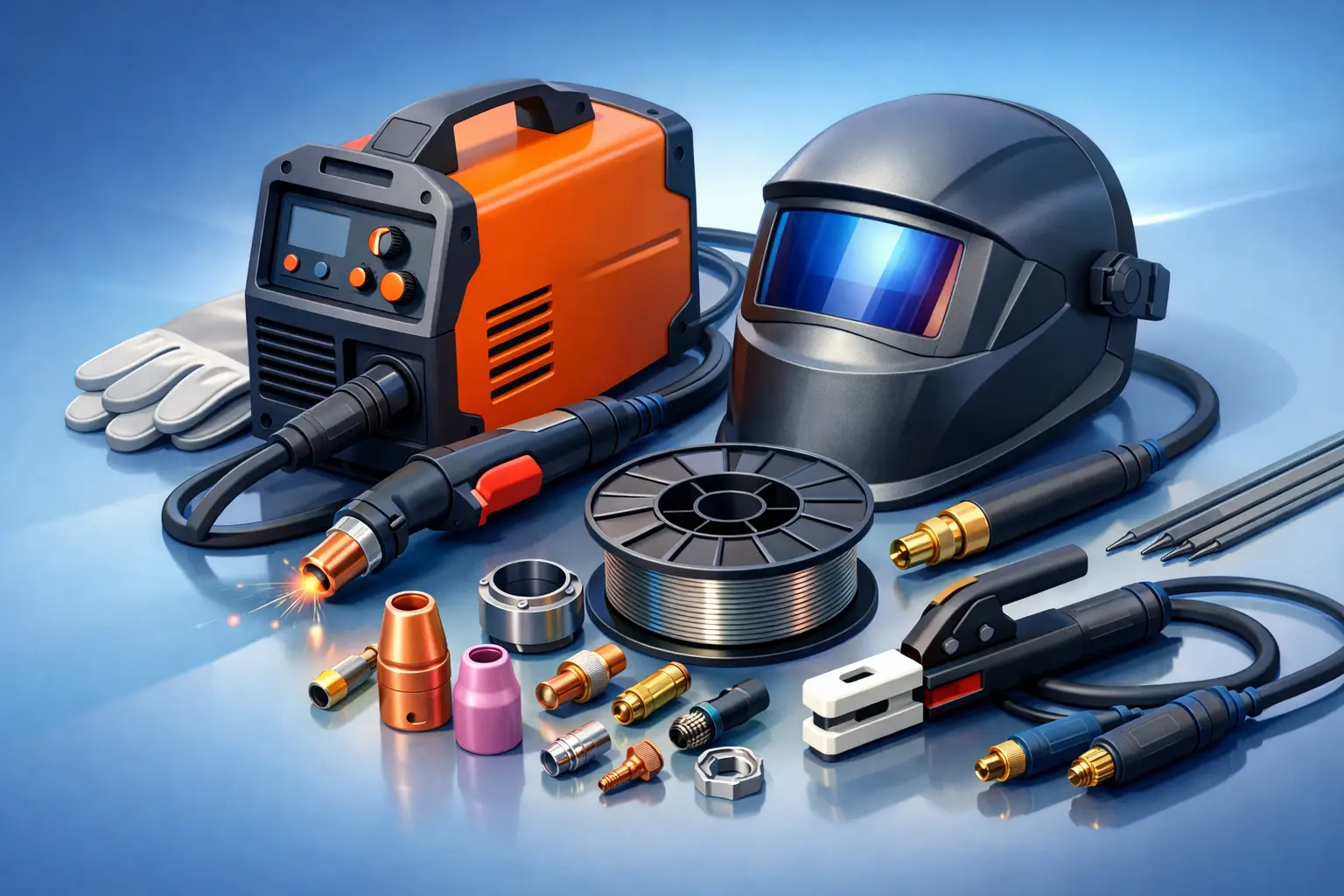
Torch-related items are the obvious starting point. Liners, swan necks, contact tips, shrouds, diffusers and trigger assemblies take regular abuse. On MIG sets especially, a feed issue is often traced back to a worn liner, contaminated tip, damaged torch cable or tired drive rolls rather than a major machine fault. That is good news if you have the right stock on hand.
Then there are the machine internals and accessories that get forgotten until they fail. Wire feed motors, PCB assemblies, cooling fans, switches, Euro connectors, return lead sockets, control knobs and mains plugs can all stop a welder in its tracks. On water-cooled systems, pumps, hoses and cooler fittings deserve the same attention. Plasma units bring their own wear points too, with consumable-related issues sometimes masking a wider fault in airflow, torch assembly or power delivery.
The key point is simple – not all spare parts are equal. Some are genuine wear items. Others are fault parts. Knowing the difference saves time and stops you replacing half a machine to fix one bad connection.
Why compatibility matters more than price
Buyers under pressure often search by appearance, not by part number or machine model. That is where trouble starts. Two torches can look almost identical and still use different threads, lengths, connection types or internal layouts. A fan might fit physically but draw the wrong current. A PCB from a similar model might power up but create fresh faults the moment the machine is under load.
With welding machine spare parts, cheap and close enough is not always cheap in the end. If a part causes poor wire feed, unstable arc performance or intermittent cut-outs, you lose far more in downtime than you saved at the till. That is especially true for workshops with delivery dates to hit or maintenance teams supporting plant equipment.
This is where proper technical support earns its keep. A supplier who understands process, brand and model differences can usually narrow things down quickly. Sometimes that means supplying a genuine branded replacement. Sometimes it means identifying a compatible alternative that makes commercial sense. The best option depends on the machine value, age, duty cycle and how critical that set is to your operation.
Common signs you need spare parts, not a new machine
A lot of welders put up with a machine that is slowly getting worse. Feed becomes jerky. Arc starts turn rough. Controls feel loose. Cooling gets noisy. Then one day the machine is labelled unreliable when the real issue has been gradual wear.
If wire feed is inconsistent, start with the basics before assuming the feeder is finished. Check the liner, tip, roller tension, spool condition and torch cable routing. If a TIG set is overheating, inspect airflow, fan operation and any blocked vents before blaming the whole unit. If a plasma cutter is cutting poorly, rule out worn consumables and torch damage before calling the power source dead.
That said, there is a line. Once faults move into repeated electrical failures, obsolete electronics or rising repair costs, replacement can be the better commercial call. A good supplier will tell you that straight. There is no value in pouring money into a machine that cannot justify it.
Stocking spare parts properly in a working shop
There is a difference between sensible stockholding and filling a shelf with parts you may never use. The smart approach is based on what fails most often, what causes the biggest downtime, and what takes longest to source.
For most workshops, that means keeping the regular torch consumables and service parts in house, plus a shortlist of machine-specific items for your main sets. If you run several identical MIGs, it makes sense to hold drive rolls, liners, torches, connectors and common switches. If you have one specialist AC/DC TIG used for precision work, you may prioritise consumables, torch parts and cooling system items rather than expensive electronics.
Lead time matters too. If a part is easy to get next day, you may not need to stock it. If it is harder to source, or tied to a specific make such as ESAB, Lincoln Electric, Jasic, Kemppi, GYS or Parweld, keeping one on the shelf can save a lot of hassle. Procurement teams usually understand this once downtime is costed honestly.
Genuine vs aftermarket parts
This is one of those areas where the answer is not always black and white. Genuine parts are often the safest route for fit, performance and warranty alignment. On newer machines, they are usually the right choice. You know what you are fitting, and you reduce the risk of chasing secondary faults caused by poor tolerances or mismatch.
Aftermarket parts can still have a place, particularly on older machines where original spares are costly or discontinued. The catch is quality. A well-made compatible part can keep an older set earning. A poor one can create feeding issues, heat build-up or unreliable operation that costs more than replacing it properly.
For trade buyers, the question should be less about cheapest and more about total value. What keeps the machine productive, safe and commercially worthwhile? Sometimes that is a genuine assembly. Sometimes it is a tested alternative backed by real advice. Linc-Weld Industrial Supplies Ltd works best when customers can speak to somebody who understands that difference rather than guessing from a photo and a vague description.
Repair, replace or upgrade?
Spare parts sit in the middle of a bigger decision. If a machine is only a few years old and otherwise sound, repair is usually straightforward. If it is older but still suits the job, targeted replacement of the right parts can give it plenty of life yet. If the set is underpowered, unreliable and no longer supported properly, upgrading may be the smarter move.
This matters for buyers managing mixed fleets. A fabrication business might happily repair a premium pulse MIG because the machine justifies it. The same business may retire an entry-level site welder once board faults start stacking up. Colleges often take a similar view, balancing repair costs against reliability and student uptime.
There is also the question of compliance and service support. Calibration, electrical testing, LEV considerations and planned maintenance all feed into the decision. A cheap repair that leaves you with an awkward, unsupported machine is not always the best result.
Buying welding machine spare parts without wasting time
The fastest route is always clear machine information. Brand, exact model, serial number, process type and a simple fault description save a lot of back and forth. A photo of the damaged part helps, but it should support identification, not replace it.
It also helps to explain the symptom properly. Saying a MIG is not working is too broad. Saying the motor turns intermittently, the feed is slipping under load, or the trigger is live but there is no gas narrows the fault quickly. The more accurate the information, the faster the part can be identified and supplied.
Trade customers usually want the same thing – correct parts, fair pricing, fast UK delivery and someone who will pick up the phone if there is a problem. That is what makes a specialist welding supplier more useful than a general box-shifter. You are not just buying stock. You are buying time back.
A workshop that treats spare parts as part of its welding plan will always stay ahead of one that waits for a breakdown. Keep the common items close, get proper advice on compatibility, and be honest about when a repair still makes sense. The jobs do not stop for a worn liner, a failed switch or a tired fan, so your parts strategy should not stop there either.