Welding PPE Compliance Guide for UK Workshops

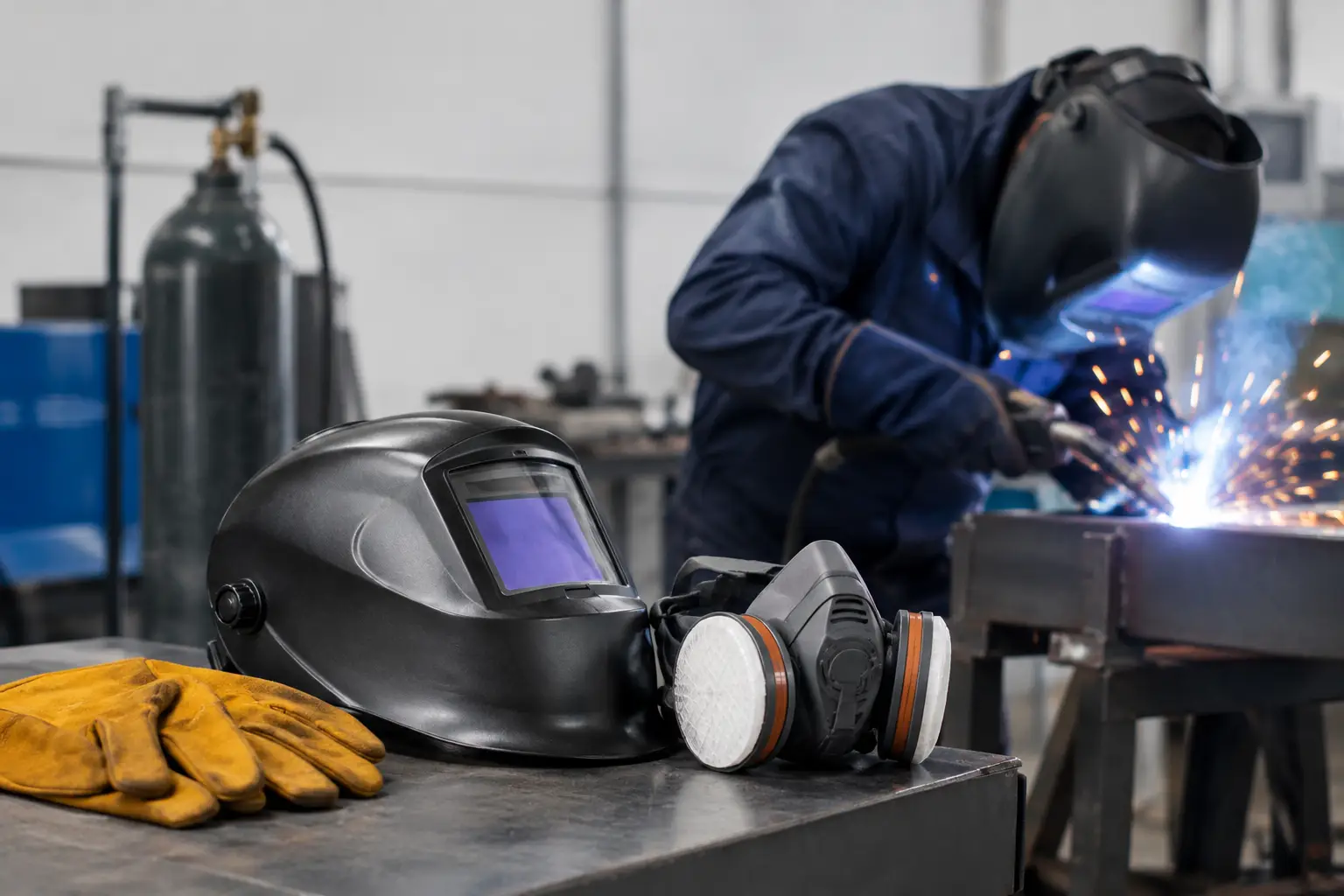
A welding bay can look well equipped and still leave people exposed. A helmet with the wrong shade, gloves that are too thin for the process, or a jacket contaminated with oil can turn a routine job into a reportable injury. This welding PPE compliance guide is built for UK workshops that need protection to work in real production conditions, not just look presentable on a site walk-round.
PPE is the final barrier after safer processes, screens, extraction and sensible working methods have been considered. It does not replace local exhaust ventilation, guarding or training. But when welding fume, UV and IR radiation, molten spatter, heat, noise and flying particles remain, the right kit is non-negotiable.
Start with the job, not the catalogue
There is no single compliant PPE bundle for every welder. MIG welding mild steel on a bench creates a different exposure profile from TIG welding stainless pipe, MMA work outdoors, plasma cutting, or gouging inside a fabrication bay. The right specification follows a recorded risk assessment and must account for the process, material, position, duration, location and nearby workers.
For example, a welder carrying out overhead MMA repairs needs serious protection from falling slag and spatter, including a close-fitting fire-retardant hood or head covering. A TIG welder handling thin stainless may value dexterity, but still needs gloves that protect against heat, UV exposure and sharp edges. A plasma operator may need enhanced face, body and hearing protection because of the noise, sparks and reflected arc light.
The practical question is simple: what can reach the welder, and what can reach everyone else in the area? Answer that before choosing sizes, brands or price points.
Core welding PPE and what compliance looks like
A compliant setup is more than putting CE or UKCA-marked items in a locker. PPE must be suitable for the risk, compatible with other protection, maintained, correctly fitted and actually worn. Supervisors should be able to explain why each item was selected.
Welding helmets, visors and eye protection
Arc welding helmets must provide suitable protection from ultraviolet and infrared radiation as well as visible light. Lens shade selection depends on welding current and process. A shade that is too light can expose the eyes to harmful radiation; one that is too dark can make it difficult to see the pool, joint line and hazards around the job.
Auto-darkening helmets are popular for production work because the welder can keep the helmet down while positioning the torch. They still need checking. Confirm the lens switches reliably, the sensors are clean and unobstructed, batteries or solar cells are functioning, and the shell has not been cracked by impact or heat. Fixed-shade helmets remain a dependable choice where the process is consistent, but they must still match the work.
Safety spectacles should normally sit underneath the welding helmet. They protect during grinding, chipping slag, handling material and lifting the helmet between welds. For grinding, use appropriate impact-rated eye protection and a face shield where the risk assessment calls for it. A welding helmet is not a grinding visor.
Gloves, clothing and footwear
Welding gloves need to match both heat exposure and handling demands. Heavy-duty leather gauntlets suit many MIG, MMA and hot-work applications. TIG gloves are generally thinner for torch control, but they are not a substitute for heavier gloves when moving hot parts or handling rough fabrication.
Flame-resistant clothing should cover the body fully, fit closely enough to prevent sparks entering folds, and remain free of oil, grease and solvent contamination. Leather welding jackets, sleeves and aprons provide added protection where spatter is frequent or the work is overhead. Synthetic clothing can melt or shrink under heat, so everyday workwear is not automatically suitable for welding.
Safety boots should protect against dropped steel, sharp offcuts, hot fragments and slipping. Leather uppers, suitable toe protection and heat-resistant or slip-resistant soles may all be relevant, depending on the job. Tuck trousers over boots rather than into them, so sparks cannot collect inside the footwear.
Respiratory protection and welding fume
Fume control is where many workshops fall short. Welding fume can contain hazardous substances, particularly when working on stainless steel, galvanised steel, coated materials or alloys. PPE should never be the first answer when fume can be captured at source by properly positioned local exhaust ventilation.
Where residual exposure remains, or where LEV cannot adequately control the task, suitable respiratory protective equipment may be required. The type depends on the contaminant, concentration, task duration and face-fit. Disposable filtering facepieces can have a place for short, low-exposure tasks when selected properly, but they are easily undermined by poor fit, facial hair, moisture or repeated use beyond their intended life.
Powered air respirators integrated with welding helmets can improve comfort on longer jobs and help reduce fatigue. They are not a fit-and-forget purchase. Filters require scheduled changes, batteries need charging and the unit must be inspected. Tight-fitting masks require face-fit testing, and beards or heavy stubble prevent an effective seal.
Hearing, head and task-specific protection
Grinding, gouging and plasma cutting can create damaging noise levels, especially in enclosed bays. Select hearing protection that gives adequate attenuation without isolating workers from alarms, vehicles or instructions. Overprotection can create its own safety problem.
Hard hats, bump caps, kneepads, welding blankets, arm guards and fall-protection equipment are task-specific rather than universal. Do not add them by habit. Add them where the work location and risk assessment justify them, then check that they do not interfere with helmets, respirators or safe movement.
Make PPE work as a system
Compatibility is a common failure point. A half-mask respirator can push safety spectacles out of position. Ear defenders can affect a welding helmet’s fit. A thick jacket can restrict shoulder movement and encourage a welder to lift their visor or remove gloves. If protection is uncomfortable or makes quality work harder, people will find a workaround.
Trial equipment with the people doing the job. Check visibility in the actual welding position, access to controls, torch handling, communication and comfort across a full shift. Different sizes and left-handed options matter. Buying one standard issue for every person may look efficient on a purchase order, but it often costs more in non-compliance, wasted consumables and avoidable injuries.
Inspection, storage and replacement
PPE compliance depends on condition. A helmet with a scratched cover lens, gloves with burned-through fingertips or a respirator with damaged seals should not remain in service because it is still technically wearable.
Set a simple inspection routine. Welders should carry out a quick pre-use check, while supervisors should complete scheduled checks and record defects, replacements and corrective action. Keep spare cover lenses, gloves, filters and basic repair parts available so damaged PPE can be replaced immediately instead of being used for the rest of the shift.
Store clean PPE away from welding dust, moisture, direct sunlight and chemical contamination. Respiratory equipment deserves particular care: clean it as instructed, dry it properly and store it in a protected container or bag. Do not leave masks, helmets or gloves on a welding bench where they can be struck, contaminated or used by someone else without inspection.
Training and records that stand up to scrutiny
Handing out PPE is not training. Welders need to know what each item protects against, its limits, how to fit and adjust it, how to identify damage and when to stop work. This is especially relevant for apprentices, agency workers and staff moving between welding, grinding and cutting tasks.
Keep your process risk assessments, PPE issue records, face-fit test records where applicable, LEV examination documentation and training records organised. Records do not make a workshop safe on their own, but they show that selection and control have been managed rather than assumed. Review them whenever a new process, material, wire, gas, machine or work area changes the exposure.
Linc-Weld can help workshops source welding PPE that suits the process and the person wearing it, alongside the consumables, extraction support and practical equipment advice needed to keep jobs moving.
The best PPE policy is the one a welder can use properly at 7am, halfway through a hot repair and at the end of a demanding shift. Specify it for the real job, inspect it before it fails, and give your team no reason to work without it.