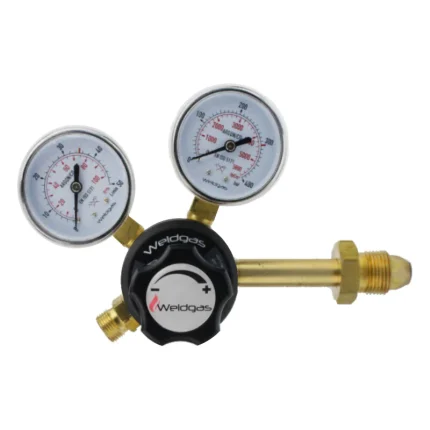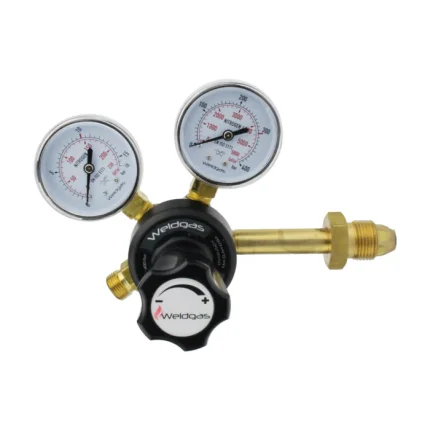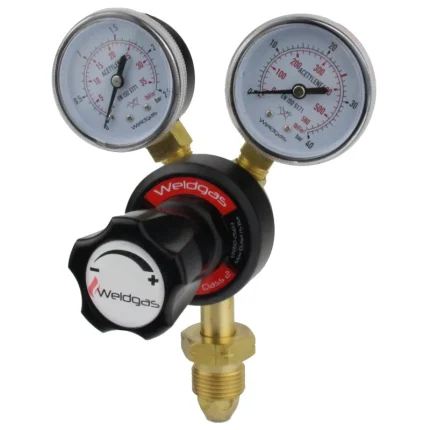
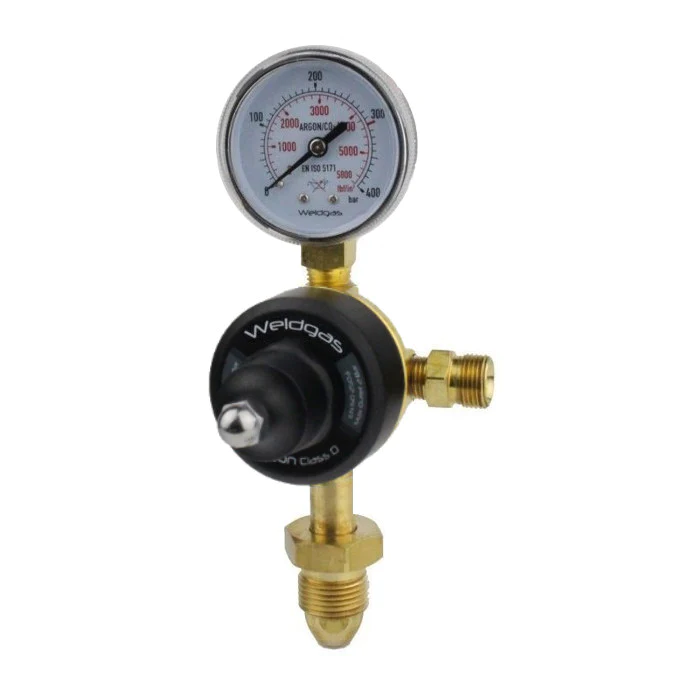
Single Stage 1G Argon CO2 Regulator
£29.99 ex.VAT
The Single Stage 1G Argon CO2 Regulator is a highly reliable and efficient device. Which then regulates the flow of argon and CO2 gases in welding and metal
ARGON CO2 REGULATOR
The Single Stage 1G Argon CO2 Regulator is a highly reliable and efficient device. Which then regulates the flow of argon and CO2 gases in welding and metal fabrication applications. The designers have designed this regulator with precision and durability in mind, making it an essential tool for welding professionals.
CO2 regulator features a single-stage diaphragm design that allows for accurate pressure control and stable gas flow. Which can handle up to 3000 PSI of input pressure and has a maximum output pressure of 60 PSI, making it ideal for most welding applications. It also features a safety relief valve that ensures the system is protected from overpressure and guarantees the user’s safety.
They have ensured that the regulator is easy to use and maintain, with a simple and straightforward design that facilitates quick and easy disassembly and cleaning. The regulator is also highly durable, thanks to its brass construction and chrome-plated finish, which provides protection against corrosion and damage.
The Single Stage 1G Argon CO2 Regulator is also highly versatile, as it is compatible with a wide range of welding and cutting applications. It can be used with MIG, TIG and Stick machines, as well as plasma cutters and other gas-powered tools.
Specification of Argon CO2 Regulator:
A s Argon CO2 regulator with pre-set 2 bar gauge.
• Regulator Type: Single Stage
• Gauges: One
• Gas Type: Argon CO2
• Specification: BS EN ISO 2503
There are other types of gas regulators as well, which are used in welding. Lincweld offers various regulators at most competitive prices!
Uses of Argon CO2 Regulator:
An Argon-CO2 regulator is a crucial tool in welding and various industrial processes, ensuring precise control of gas flow and pressure. In Metal Inert Gas (MIG) and Tungsten Inert Gas (TIG) welding, it provides a stable supply of shielding gas, protecting the weld pool from atmospheric contamination and allowing for high-quality welds. The regulator adjusts the flow rate, essential for different materials and techniques, and reduces high cylinder pressure to a usable level, maintaining weld integrity. Beyond welding, it is used in laser cutting, metal fabrication, and laboratory applications, where it ensures accurate gas delivery for clean cuts, strong joints, and reliable experimental conditions. With dual gauges for monitoring cylinder and outlet pressure, and safety features like relief valves, Argon-CO2 regulators offer versatility, safety, and efficiency, making them indispensable in achieving optimal results across various applications.
FAQs:
Can I use an argon regulator for CO2?
Generally, no. Regulators are designed for specific gases, and using an argon regulator for CO2 can result in improper functioning or safety hazards due to differences in gas properties and pressures.
What is an argon regulator used for?
An argon regulator is used to control the flow and pressure of argon gas from a cylinder, commonly in welding applications like TIG and MIG welding, to ensure a stable and precise gas supply.
What is argon CO2 gas used for?
Argon-CO2 gas mixtures are primarily used in MIG welding as shielding gases to protect the weld area from atmospheric contamination, ensuring clean, strong welds with reduced spatter and oxidation.
What is the difference between a CO2 cylinder and an argon cylinder?
A CO2 cylinder typically contains compressed liquid CO2, which can be at higher pressures and may require specific regulators and valves. An argon cylinder contains compressed argon gas at high pressure, usually requiring different regulators and fittings suited for inert gases.
Related products