Welding Repairs That Keep Workshops Moving

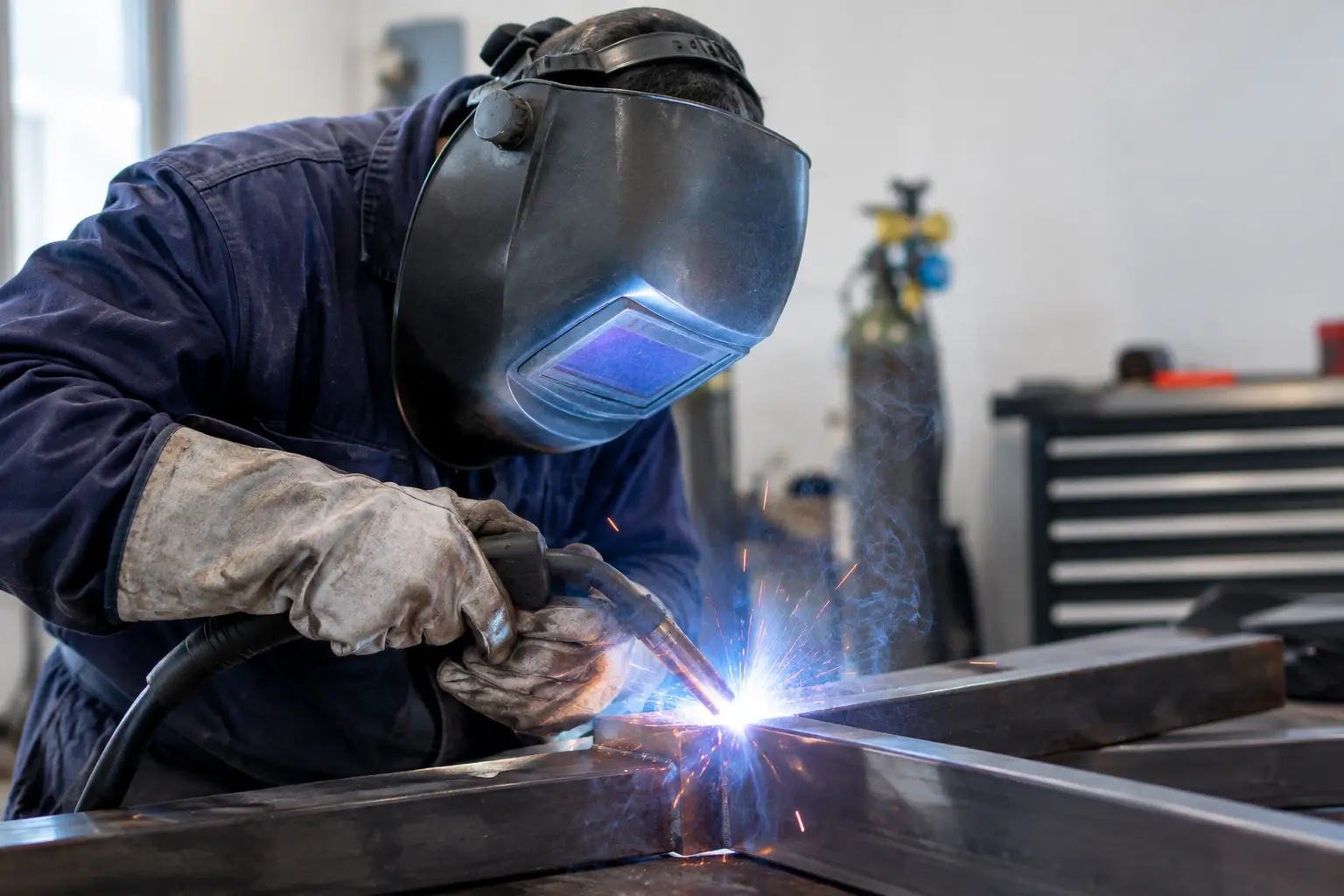
A MIG set that suddenly burns back, a TIG arc that will not hold steady, or a plasma cutter that loses output halfway through a job can stop far more than one weld. Delayed welding repairs cost labour hours, hold up fabrication schedules and can leave a team reaching for a hire machine at the worst possible time. The best approach is not to wait for a complete failure. Spot the signs early, isolate the cause properly and get the right level of repair before a minor issue becomes lost production.
When Welding Repairs Make Commercial Sense
Not every fault needs a new machine, and not every older welder is worth saving. The right decision comes down to the cost of repair, the condition of the machine, parts availability and the impact of downtime on your work.
A quality inverter MIG, TIG or MMA set can often give many more years of dependable service when it is repaired and maintained correctly. Replacing a worn torch, damaged earth lead, faulty wire-feed component or cooling fan is usually straightforward compared with replacing the complete power source. The same applies to plasma cutters where consumables, torch parts, air supply faults and poor connections are often mistaken for a major machine problem.
The calculation changes when a machine has repeated board failures, obsolete components or has become unsuitable for the work now being carried out. A fabrication shop moving into aluminium work, for example, may spend money repairing an older transformer MIG set only to find it still lacks the pulse control, spool gun capability or stable low-amperage performance required. In that case, replacement can be the more productive investment.
For working equipment, speed matters. A repair that gets the right machine back into service quickly is generally better value than a cheap fix that returns with the same fault a fortnight later. Ask for a clear diagnosis, the proposed parts and labour, and an honest view on whether the repair is commercially sensible.
Start Welding Repairs With a Proper Fault Check
A fault code does not always point to a failed circuit board. Equally, a machine that powers on does not prove that it is safe or ready to weld to standard. Good fault-finding checks the whole working system, from the incoming supply through to the torch, return lead and consumables.
Check the simple causes first
Many apparent welding-machine faults begin outside the machine. Loose connections, damaged cables, an undersized extension lead, poor earthing, contaminated liners and restricted gas flow all affect arc performance. On site, power quality can also be a factor, particularly where generators, long supply runs or shared circuits are involved.
With MIG equipment, inspect the contact tip, shroud, diffuser, liner, drive rolls and wire spool before assuming the feeder has failed. A bird-nested wire spool, inconsistent feed or excess spatter may come from incorrect drive-roll tension, the wrong groove profile or a worn liner. Aluminium wire is particularly unforgiving and needs the correct consumables, setup and torch arrangement.
For TIG welding, poor starts or an unstable arc can be caused by contaminated tungsten, incorrect gas flow, a leaking torch, a damaged collet body or a poor work return. Plasma cutting faults often trace back to moisture or oil in the air supply, low pressure, worn electrodes and nozzles, or an earth clamp connection that has seen better days.
These are checks a competent operator can make during normal maintenance. If the fault involves internal electrics, insulation damage, repeated tripping, burning smells or erratic output, stop using the equipment and arrange professional inspection. Removing covers and working inside a powered welding set is not a shortcut worth taking.
Separate a process issue from a machine issue
The weld itself is useful evidence. Porosity, lack of fusion, inconsistent penetration and excess spatter can result from machine problems, but they may also come from gas coverage, material preparation, consumables or incorrect parameters.
Before booking a repair, record what the machine is doing, which process is affected, the material being welded, the settings in use and whether the issue happens with another torch or lead set. Note any error messages and take photographs of damaged components where safe to do so. This saves time and gives the engineer a better starting point.
A workshop that runs several machines should also compare performance. If two welders show the same unstable arc on the same job, look at the gas, earth arrangement, material or power supply first. If only one machine is affected, the issue is more likely to be local to that unit or its accessories.
Common Faults and What They Usually Point To
Wire-feed problems are among the most common MIG repair jobs. Worn drive rolls, blocked liners, damaged torch necks and loose wire-feed connections all cause poor feed. In severe cases, the feeder motor, control board or wire-feed assembly may need attention, but consumables and setup should be ruled out first.
Overheating is another regular issue. A welder that cuts out under load may have blocked airflow, a failed fan, a damaged thermal sensor or a duty-cycle problem. Welding beyond the stated duty cycle will trigger protection on many machines, especially in hot workshops or confined areas. Cleaning air vents and keeping machines off dusty floors helps, but compressed air must be used carefully to avoid forcing debris deeper into sensitive components.
Output faults need a more disciplined diagnosis. Weak arc performance, no output, intermittent output or failure to strike can relate to leads, switches, internal connections, rectifiers, capacitors, control boards or inverter modules. These repairs require correct test equipment and trained engineers, not guesswork.
Water-cooled systems add another maintenance point. A low coolant level, kinked hose, failed pump or leak can quickly damage a torch and make high-amperage TIG work unreliable. Use the correct coolant, inspect hoses and couplings, and do not ignore changes in torch temperature.
Battery-powered welding gear, induction heaters and automated or cobot welding systems also need their own service approach. Software settings, interlocks, cable looms, cooling systems and calibration can all affect performance. The more advanced the system, the more valuable a documented inspection becomes.
Repairs, Calibration and Compliance Belong Together
A repair should restore function, but professional workshops need more than a machine that simply turns on. Output accuracy, electrical condition and safe operation matter where weld procedures, repeatability and traceability are part of the job.
Machine calibration is particularly useful where settings need to match actual output. If an operator selects a given amperage or voltage but the machine is no longer delivering it accurately, weld quality can drift without an obvious visible fault. This can be a serious issue for coded work, production welding or training environments where learners need consistent results.
Do not overlook fume control either. A repaired welding machine does not solve an extraction system that is underperforming. Local exhaust ventilation testing and regular maintenance are part of keeping welders protected and supporting compliance in busy bays. The same goes for damaged welding curtains, tired earth leads, cracked torch bodies and PPE that is no longer doing its job.
Keep a simple service record for each machine. Record the serial number, reported fault, diagnosis, parts fitted, test result and next inspection date. For larger operations, this makes it easier to identify repeat faults, plan downtime and decide when a unit is costing more to keep than to replace.
Choosing the Right Repair Support
The cheapest repair quote is not automatically the best one. Look for a provider that understands the brand and process involved, has access to genuine or suitable replacement parts, and can explain what has failed in plain language. Turnaround also matters. A workshop with one critical AC/DC TIG machine has very different priorities from a college with a fleet of training MIG sets.
Where possible, use a repair service that can support the wider setup as well. That includes machine calibration, emergency engineer callouts, consumable compatibility, gas and torch troubleshooting, plus advice on replacement equipment when a repair is no longer worthwhile. Linc-Weld supports this practical, service-led approach, helping customers move from fault report to a workable solution without dealing with several separate suppliers.
Before approving work, confirm whether the repair includes inspection and load testing, what parts are being used, whether further faults may be uncovered once the machine is opened, and how the repair is covered. A clear estimate avoids surprises and makes procurement decisions easier.
Keep the Next Breakdown Small
Most unexpected failures have a history: a fan getting louder, a torch starting to run hot, wire feed becoming less consistent, or a machine needing settings pushed further than normal to achieve the same result. Build quick pre-use checks into the working day, keep consumables and leads in good condition, and act on small changes while they are still small. That is how a welding repair stays a planned maintenance job rather than a lost shift.