
Plasma Cutter Maintenance That Keeps Cuts Clean

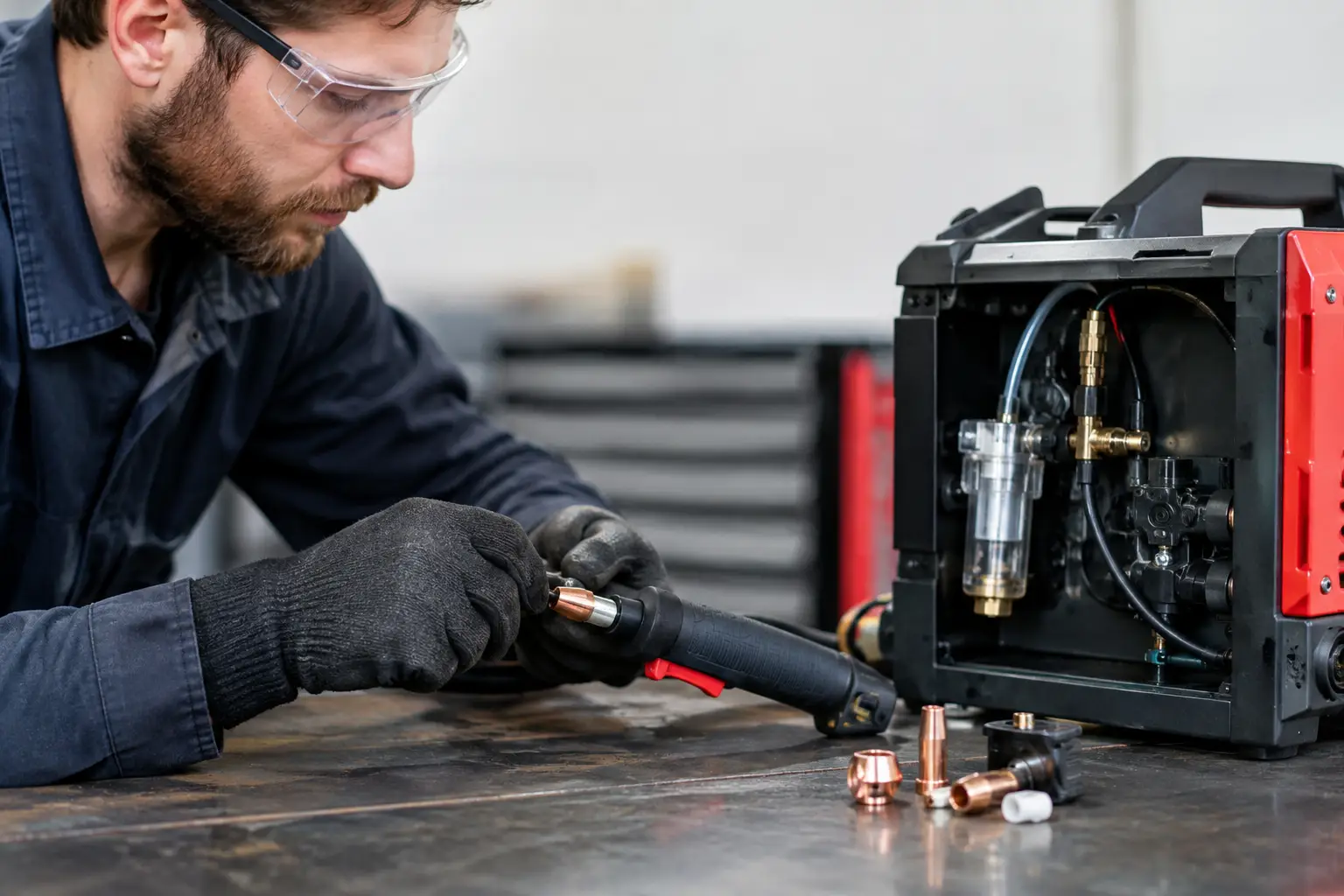
A plasma cutter that suddenly leaves heavy dross, struggles to pierce, or chews through electrodes is rarely asking for a new machine. More often, it is asking for basic plasma cutter maintenance that has been missed between jobs. A few minutes spent checking air quality, consumables and connections can save a costly callout, protect cut quality and keep work moving.
For fabrication shops, site teams and maintenance departments, the aim is simple: get consistent cuts without burning through consumables or losing time to faults that could have been avoided. The exact routine depends on the machine, duty cycle and material being cut, but the fundamentals apply to compact inverter units and high-output production systems alike.
Start with clean, dry compressed air
Poor air supply is one of the most common causes of shortened consumable life. Plasma needs clean, dry air at the pressure and flow rate specified by the machine manufacturer. Moisture, oil and dirt in the supply can damage electrodes and nozzles, make the arc unstable and leave poor edge quality.
Drain the compressor receiver regularly, particularly in cold or damp workshops where condensation builds quickly. Check the water trap before starting a shift and replace filter elements when they are contaminated or reach their service interval. If the bowl is repeatedly filling with water, the answer may be a properly sized refrigerated dryer rather than continually replacing torches and tips.
Do not guess at pressure. Set it with air flowing through the torch, not simply with the machine sitting idle. A pressure reading can look correct until the trigger is pressed and demand exposes restrictions in hoses, couplings or filters. Low pressure can cause poor cutting performance, while excessive pressure may make arc starting less reliable on some systems.
Check hoses, fittings and airflow restrictions
Walk the airline from compressor to machine. Look for crushed hose, leaking fittings, damaged quick-release couplings and makeshift extensions that reduce flow. A small leak may seem harmless, but it makes the compressor work harder and can leave the cutter starved when demand peaks.
Keep the plasma cutter away from grinding dust and avoid drawing compressor air from a dirty corner of the workshop. Good air is a consumable in its own right. If it is poor, every other maintenance job becomes less effective.
Inspect torch consumables before they fail
The electrode, nozzle, swirl ring, shield cap and retaining cap work as a set. They should be inspected together, fitted correctly and matched to the torch and amperage being used. Mixing near-identical parts from different torch families is an expensive mistake that can create poor contact, air leaks and rapid failure.
Remove consumables only when the machine is isolated and the torch has cooled. Check the electrode for a deep central pit. Once the hafnium insert has worn beyond the manufacturer’s stated limit, replace the electrode. Running it until it fails can take the nozzle with it and may damage the torch body.
Inspect the nozzle or tip for an enlarged, oval or irregular orifice. A damaged opening produces a wandering arc, wider kerf and bevelled cut edge. If operators find themselves repeatedly slowing down to get through material that was previously straightforward, consumables should be the first inspection point.
The swirl ring deserves attention too. Cracks, blocked gas ports or heat damage will affect the gas pattern around the arc. Check O-rings for cuts, flattening and signs of overheating, using only a suitable lubricant if the manufacturer permits it. Petroleum-based products can damage seals and attract dirt.
There is a trade-off here. Changing parts at the first sign of discoloration wastes usable consumables, but stretching them past their working life creates poor cuts and often damages more expensive components. Keep a record of typical electrode and nozzle life for each machine and process. That gives the workshop a realistic benchmark instead of relying on guesswork.
Keep the torch, lead and work clamp in good order
A plasma torch spends its life close to heat, sparks, sharp plate edges and spatter. Inspect the torch head and lead at the start of the day. Look for splits in the outer cover, exposed wiring, crushed sections and heat damage near the torch handle. A lead that has been run over by a pallet truck or trapped in a fabrication bench may work intermittently before it fails completely.
Clean away metal dust from the torch exterior and make sure the consumables seat squarely. Do not overtighten the retaining cap. It needs to be secure, but forcing it can damage threads and seals.
The work return clamp is just as critical. Clamp directly onto clean bare metal where practical, as close to the cut as possible. Rust, paint, mill scale and loose jaws add resistance, which can lead to erratic arc transfer and rough starts. Clean the clamp faces, check spring tension and inspect the cable termination for heat marks or looseness.
For mechanised cutting, inspect torch height control connections, mounting hardware and the machine earth arrangement as part of the same routine. A worn torch consumable can be the visible symptom, while incorrect height or a poor return path is the root cause.
Clean the machine without forcing dust inside
Plasma cutters pull cooling air through the case, and workshops provide plenty of grinding dust, steel particles and general debris to go with it. Restricted airflow raises internal temperatures, reduces duty cycle and puts strain on fans and power components.
With the machine disconnected from the mains and following the manufacturer’s instructions, inspect vents and remove loose dust using dry, low-pressure air or a vacuum designed for the job. Take care not to blast debris deeper into circuit boards, switches and cooling channels. Never use compressed air recklessly around electronic components.
Check that cooling fans run freely and listen for unusual bearing noise. Keep clearance around the machine’s air inlets and outlets. Parking a cutter against a wall, covering it with coats or storing it under a bench full of offcuts is a reliable way to create heat-related problems.
External cleaning matters as well. Wipe down controls, inspect the mains cable and plug, and make sure labels remain legible. If a machine is used outdoors or on site, check for water ingress and transport damage after every move. A plasma cutter is tough equipment, but it is not immune to being thrown into the back of a van with leads tangled around it.
Match settings and technique to the job
Not every cut-quality problem is a maintenance fault. Cutting above the machine’s rated capacity, using the wrong amperage, dragging a stand-off torch when it should be held off the work, or travelling too slowly can all destroy consumables early.
Use the manufacturer’s cut charts as a starting point. They give a sensible combination of amperage, air pressure, travel speed and pierce height for the material thickness. Fine-tune from there for the plate condition and required finish. Thick rusty steel, coated material and expanded metal do not behave like clean mild steel plate.
Watch the sparks. When cutting properly, they should exit beneath the material at a slight angle in the direction of travel. If they spray back towards the torch, speed may be too high. If the cut is wide with excessive dross, speed may be too low or the consumables may be worn. That visual check gives an experienced operator useful information before a fault becomes a stoppage.
Build a maintenance routine the workshop will actually follow
A maintenance plan only works if it fits the pace of the job. Daily checks should cover air supply, consumable condition, torch lead, work clamp and obvious external damage. Weekly checks can include filters, airline leaks, vents and fan operation. At planned service intervals, inspect internal components as specified by the manufacturer and arrange repairs if there are signs of electrical, gas or cooling-system faults.
Keep the right consumables in stock for every cutter in use, clearly labelled by machine and torch type. Storing a small number of correct electrodes, nozzles, shields, caps and filters costs far less than stopping a job because someone fitted an unsuitable part or used the last good tip.
Record recurring issues. If one machine consistently burns nozzles faster than another, look beyond the consumables. Compare air quality, operator technique, return-clamp position, material type and actual cutting amperage. Patterns are usually easier to fix than one-off failures.
When to call in a repair engineer
Stop using the machine and seek qualified support if it trips breakers, gives electric shocks, smells of burnt insulation, leaks air internally, repeatedly shows fault codes, or has a damaged torch lead or mains cable. Internal repairs are not a shortcut job. Plasma systems contain high voltages and electronic components that need proper diagnosis.
For busy workshops, planned inspection and repair support is usually better value than waiting for a complete failure. Linc-Weld can help with equipment repairs, technical advice and the consumables needed to get compatible plasma systems back to work.
Clean air, correct consumables and a decent daily check will not eliminate every fault. They will, however, prevent the common ones that turn a straightforward cutting job into lost production and a rush order for parts.