LEV Testing Frequency: When Does Your System Need Testing?

A welding bay can look clean, the fan can sound as if it is running properly, and the extraction arm can still be failing to control fume at the point of work. That is why LEV testing frequency is not a paperwork exercise. It is about proving that the local exhaust ventilation system protecting your welders is still doing the job it was installed to do.
For most UK fabrication workshops, the baseline is clear: LEV used to control exposure to hazardous substances must receive a thorough examination and test at least every 14 months. But treating that as the only date that matters is how faults get missed, production gets interrupted and people stay exposed for longer than they should.
How often should LEV be tested?
Under COSHH, an employer must make sure LEV is maintained in efficient working order, good repair and clean condition. Where it is used to control hazardous substances, it must also have a thorough examination and test at suitable intervals. For most welding fume extraction systems, that means at least once every 14 months.
That 14-month interval is the legal maximum for many common welding applications, not a target to stretch. The correct frequency depends on the process, the contaminant, how heavily the equipment is used and the type of extraction system in place. A busy fabrication shop running multiple MIG bays for two shifts is very different from a college workshop with intermittent training use.
Some work activities need testing more often. Systems used for abrasive blasting, for example, can require monthly examination. Processes that create significant dust deposits in ducting may require six-monthly checks. If your LEV is controlling particularly hazardous materials, or your risk assessment identifies a higher failure risk, a shorter examination interval may be necessary.
Welding fume extraction usually falls under the 14-month rule
Welding fume is a serious workplace health risk. The HSE expects employers to use engineering controls, such as on-torch extraction, mobile fume units or fixed LEV, where required to control exposure. In a typical welding environment, the thorough examination and test interval is normally 14 months, provided the system remains suitable for the work and is properly maintained.
The date on the last report is only part of the picture. If the welding process changes from light mild steel work to stainless steel, galvanised material or higher-volume production, the original extraction arrangement may no longer be adequate. The same applies when bays are moved, ductwork is altered or a new machine is added to an existing system.
What a thorough LEV examination actually checks
A proper LEV thorough examination and test is more than switching on a fan and checking for suction at the hood. The examiner assesses whether the system is effectively controlling exposure, taking measurements and inspecting the components that affect performance.
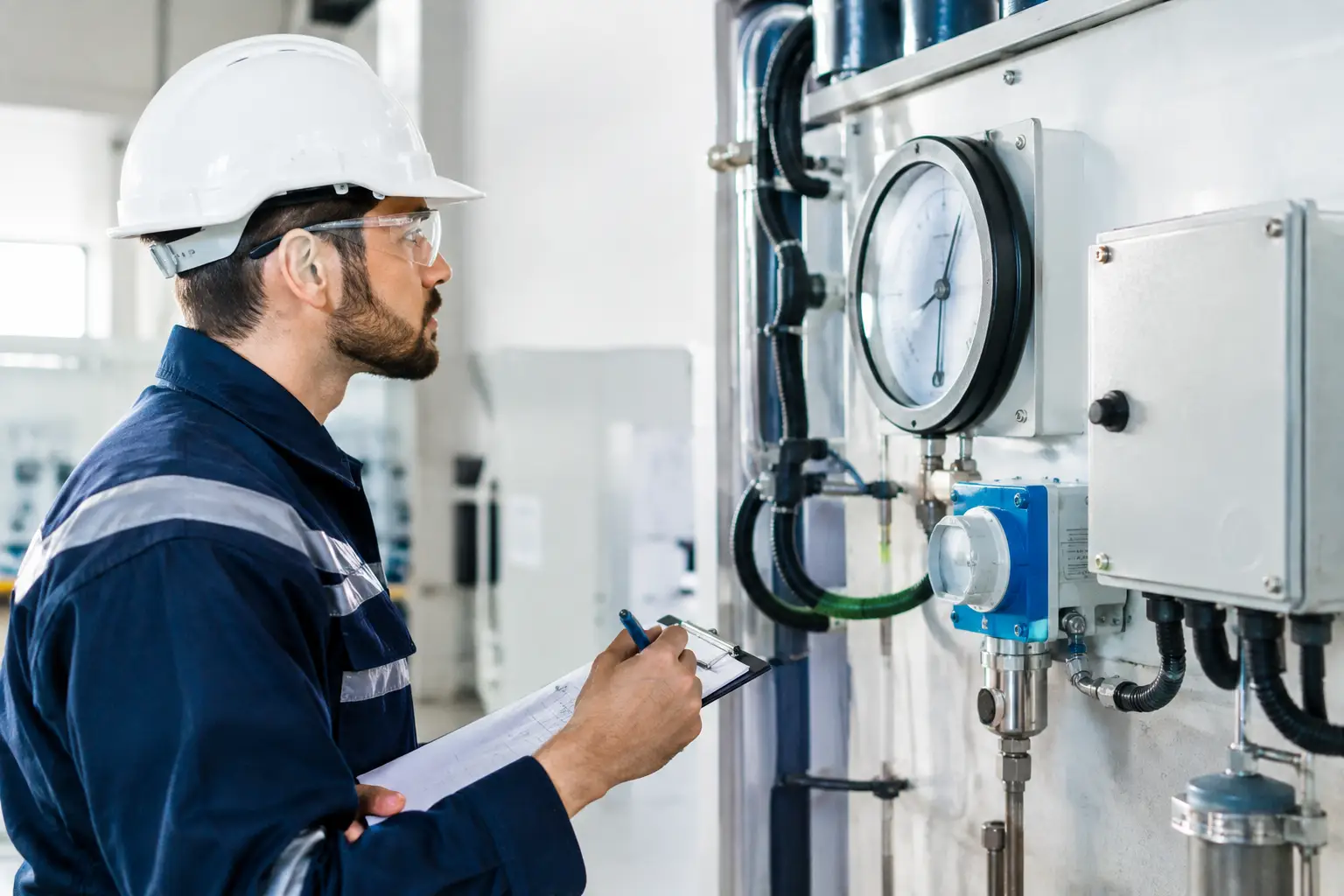
This will typically include the capture hood or extraction torch, flexible arms, filters, ductwork, fan, discharge point and make-up air. The examiner may measure air velocity, airflow volume, static pressure or other indicators specified in the system’s commissioning information. They will also check whether the hood is positioned well enough to capture fume before it reaches the welder’s breathing zone.
The final report should state whether the equipment passed, identify defects and set out any action needed. Keep this record available. COSHH requires LEV examination and test records to be retained for at least five years.
A pass does not mean the system is permanently sorted. It means that, on the day of examination, it was found to be performing as required. Filters load up, arms get knocked, hoses split, extraction points are blocked and staff can unintentionally work outside the effective capture zone.
Daily and weekly checks between formal tests
Your statutory LEV test interval does not replace routine operator checks. The people using the bay are best placed to spot changes early, before a minor fault becomes an exposure issue or an expensive repair.
A sensible workshop routine includes a quick visual and functional check before use. The operator should look for obvious damage, check that the extractor starts correctly and position the hood or arm close enough to the weld to capture fume effectively. If airflow sounds weak, filters show an alarm, or fume is visibly escaping into the work area, the system needs attention.
Supervisors should also arrange regular planned inspections. How often depends on use, but weekly or monthly checks are common in busy shops. These can cover filter condition, seals, hose condition, arm movement, fan noise, pressure gauges and housekeeping around extraction points.
Do not wait for the 14-month test if any of the following is happening:
- Visible welding fume remains in the welder’s breathing zone.
- The extraction arm will not hold position or is difficult to manoeuvre.
- Airflow has noticeably reduced, or a filter warning is showing.
- Ducting, hoses, hoods or extraction torches are damaged.
- The process, materials, consumables or working layout have changed.
Taking an extractor out of service can feel inconvenient when jobs are moving through the shop. Carrying on with a system that is not controlling fume is a bigger risk. Isolate the equipment where necessary, record the fault and get it repaired promptly.
Why the test date can change after a workshop change
LEV is not a standalone purchase. It is part of the whole welding process, including the material being welded, the consumables, welding current, duration of the task and the operator’s working position.
A fixed extraction system designed for one bay may not perform correctly once screens, benches or partitions are added. A mobile unit may have enough airflow on paper but provide poor control if the nozzle is left too far from the arc. On-torch extraction can be highly effective, but only if the torch, hose and consumables are compatible and the extraction unit is maintained.
Commissioning data matters here. When an LEV system is installed, it should be commissioned to show that it meets the required performance standard. That information gives the examiner something meaningful to compare against during future tests. Without it, proving ongoing performance becomes harder and faults can be missed.
If you have relocated equipment, extended ductwork, changed filter media or increased the number of users on a central system, arrange a review rather than assuming the existing test schedule still fits. More airflow demand on the same fan does not automatically mean more extraction at the hood.
Choosing the right level of LEV support
The cheapest test is not always the best value. A useful LEV service should identify whether the system is actually controlling fume, not simply produce a certificate. For welding workshops, that means using someone who understands extraction arms, fume units, welding bays, process changes and the practical reality of production work.
Before booking, have the previous test report, commissioning information and details of any known faults ready. Tell the engineer what materials you weld, which processes are used, whether extraction is fixed or mobile, and whether the system has changed since the last examination. This saves time on site and gives a more accurate picture of the risk.
Linc-Weld supports workshops with practical LEV testing and engineering backup, alongside the extraction equipment, welding gear and consumables needed to keep work moving. Where a report identifies a problem, getting clear advice on repair, replacement parts or a more suitable extraction setup helps prevent a compliance issue becoming a production stoppage.
Keep your LEV test programme practical
Put the next thorough examination date in your maintenance planner as soon as the current test is complete, but do not rely on a calendar reminder alone. Assign routine checks to named people, train operators to position extraction correctly and act on warning signs as they appear. A system that is tested on time, maintained properly and used properly gives your team far better protection than a certificate filed away until next year.