Plasma Cutter vs Oxy Fuel for UK Workshops

A seized excavator bracket, a stack of 10 mm plate, or 75 mm steel for site repair all demand a different answer. The plasma cutter vs oxy fuel decision is not about which process is newer or more powerful. It is about the material, thickness, access to power and gas, required edge quality, and how quickly the job needs turning around.
For many fabrication shops, plasma is the everyday production tool. Oxy fuel remains hard to beat for very thick mild steel, field work and jobs where electrical supply is limited. Buy for the work you actually do, rather than the one-off job that sticks in your mind.
Plasma cutter vs oxy fuel: the working difference
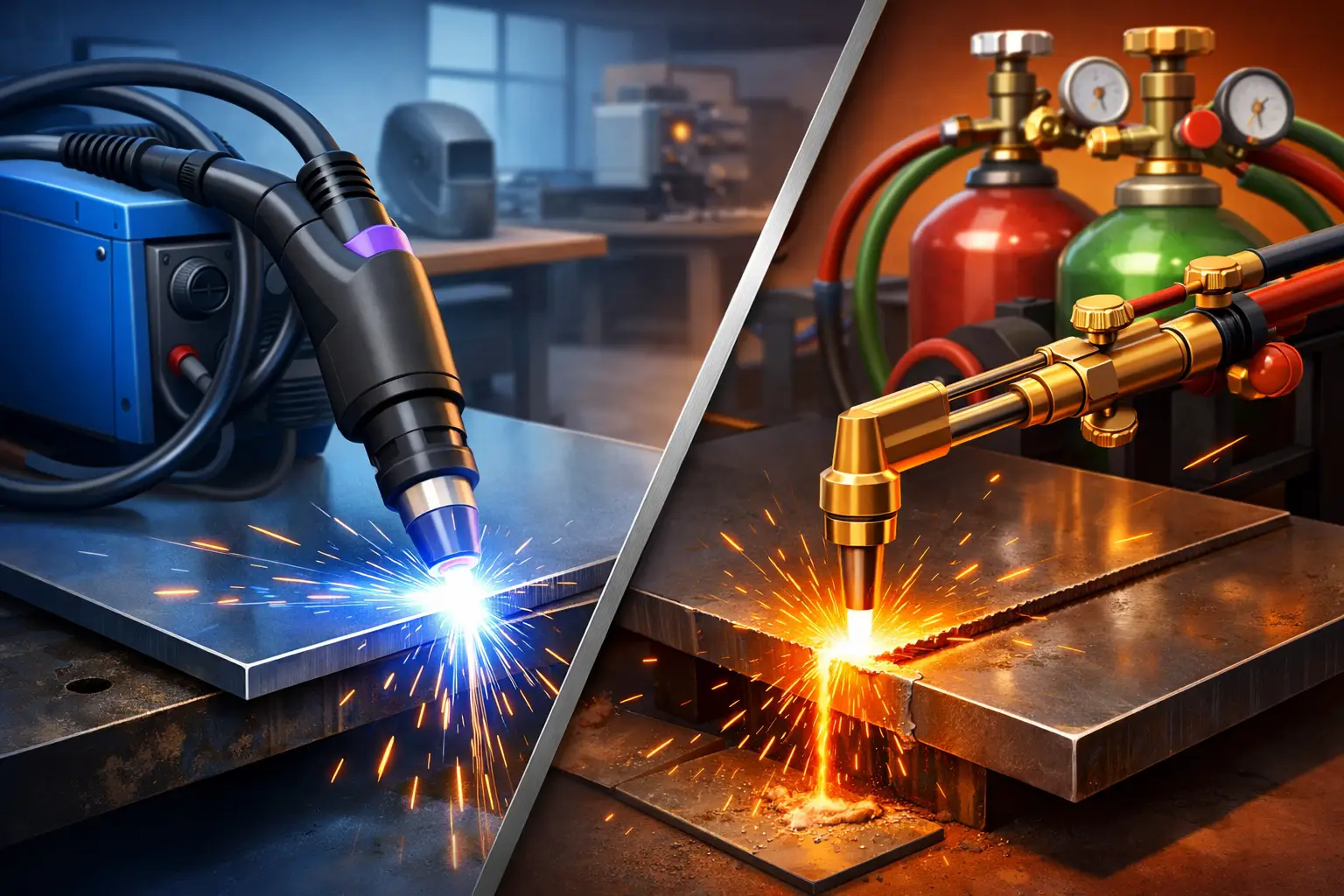
A plasma cutter creates an electrically conductive arc through a gas stream. The constricted plasma arc melts the metal while high-velocity gas blows molten material from the kerf. It needs a power source, a torch and consumables, plus clean, dry compressed air or the specified cutting gas.
Oxy fuel cutting works differently. A fuel gas flame preheats the steel to its ignition temperature, then a jet of pure oxygen oxidises the metal and ejects the resulting slag. It is a chemical cutting process, not simply a heat source. That difference explains both its strengths and limitations.
Plasma cuts electrically conductive metals. That includes mild steel, stainless steel, aluminium, copper and many other conductive alloys, provided the machine and consumables are matched to the job. Oxy fuel is primarily for carbon steel and low-alloy steel. It is not the right process for aluminium, stainless or cast iron because those materials do not oxidise in the same controlled way.
For a workshop cutting mixed materials, plasma usually gives far more flexibility. For a steel stockholder, demolition team or maintenance crew regularly dealing with heavy carbon-steel sections, oxy fuel still earns its place.
Where plasma cutting wins
Plasma is fast on thin to medium-thickness metal. On 3 mm, 6 mm or 12 mm steel, a correctly sized plasma cutter will generally start immediately and move quickly, with less heat put into the surrounding area than oxy fuel. That matters when cutting fabricated assemblies, brackets, sheet, tube and parts that need to stay as straight as possible.
The edge is usually cleaner too. A good plasma cut produces a narrow kerf, relatively low dross and a small heat-affected zone. It will not replace a laser or waterjet for precision work, but it can reduce grinding and preparation time substantially compared with a rough thermal cut. Fine-cut consumables and a mechanised torch can take this further on CNC tables.
Plasma also suits repetitive work. Once air quality, earth return, amperage and travel speed are right, operators can produce consistent cuts without waiting for each part to preheat. This is useful for fabrication shops cutting batches of gussets, base plates and profiles.
There are practical limits. Handheld plasma machines are often rated with a recommended clean-cut thickness and a higher severance thickness. Severance means the machine can get through the plate, not that the cut will be fast, square or production-ready. If you routinely cut 25 mm material, choosing a machine that only just severs 25 mm will become expensive in time and consumables.
Air supply is another deciding factor. Moisture and oil destroy electrodes and nozzles, make the arc unstable and reduce cut quality. A decent compressor, filtration and regular draining are part of the plasma system, not optional extras. On site, a compact compressor or engine-driven power solution may also need factoring into the job.
Where oxy fuel still makes sense
Oxy fuel is slower to start because the steel must be preheated, but it comes into its own as plate gets thicker. On heavy mild-steel sections, oxy fuel equipment can cut thicknesses that would demand a very large and costly plasma power source. It remains a sound choice for thick plate breaking, salvage, structural steel work and repair operations where a polished edge is not the priority.
The kit can be highly portable. A torch set, regulators, hoses, flashback arrestors and cylinders can go where a mains-powered plasma cutter and compressor cannot. For remote agricultural repairs, rail-side maintenance or yard work, that freedom can outweigh the slower cut speed.
Oxy fuel also gives skilled operators useful heating capability. The same gas equipment can be used for localised heating, straightening, loosening seized components and brazing where appropriate. That does not make it a replacement for every workshop process, but it can offer strong value where heating work is regular.
The trade-off is heat. Oxy fuel puts considerably more heat into the job, leaving a wider heat-affected zone and increasing the chance of distortion on lighter material. Slag on the underside is normal and often needs chipping or grinding. Cut quality depends heavily on correct nozzle size, oxygen pressure, flame setting, torch height and travel speed.
A practical comparison for buying decisions
| Job factor | Plasma cutter | Oxy fuel | | — | — | — | | Suitable materials | Conductive metals including steel, stainless and aluminium | Carbon and low-alloy steel only | | Best thickness range | Thin to medium plate, depending on machine output | Medium to very thick mild steel | | Start time | Immediate pilot arc or contact start | Requires preheat | | Heat input | Lower | Higher | | Edge finish | Cleaner, narrower kerf, less distortion | More slag and a wider heat-affected zone | | Site portability | Needs power and usually compressed air | Cylinder-based and suitable for remote work | | Ongoing costs | Consumables, electricity and air-system maintenance | Oxygen, fuel gas, nozzles and cylinder handling |
The table gives the broad picture, but thickness is where buyers most often make the wrong call. A 45 A plasma cutter can be excellent for 6 mm to 12 mm fabrication, yet it is not a sensible production choice for constant 20 mm plate work. Equally, using oxy fuel on 2 mm sheet is possible but rarely efficient or tidy.
Running cost is more than the price of gas
A plasma cutter has a higher initial equipment cost than a basic oxy fuel set, particularly if you need to add a compressor and air treatment. Its operating costs are predictable, but torch consumables need replacing as they wear. Poor air, dragging the torch when the system is not designed for it, and running at the edge of capacity will burn through consumables quickly.
Oxy fuel equipment is comparatively simple, but cylinder rental, gas refills, transport and safe storage all add up. Oxygen consumption can be significant on long cuts or thick plate. The cheapest process per metre depends on thickness, cut length, labour time and the finish needed after cutting.
Labour is often the bigger figure. If plasma saves ten minutes of heating, chipping and dressing on every component, it can justify its purchase price quickly in a busy shop. If the work is occasional heavy steel cutting in a yard with no reliable electrical supply, an oxy fuel set may deliver better value for years.
Safety and setup cannot be treated as extras
Both processes need proper PPE, extraction or ventilation, fire control and a clear work area. Plasma cutting produces intense UV radiation, hot sparks, noise and metal fumes. Use the correct shade eye protection, flame-resistant clothing, gloves and suitable respiratory controls where required. Galvanised, painted and contaminated steel needs particular care because coatings can create hazardous fumes.
Oxy fuel brings additional gas-handling risks. Cylinders must be secured upright, regulators kept clean and compatible, and hoses inspected before use. Never allow oil or grease near oxygen fittings. Fit suitable flashback arrestors and non-return valves in line with the equipment setup and workplace procedure. Check for leaks correctly, keep ignition sources under control and follow cylinder storage requirements.
For either process, train operators to recognise poor-cut symptoms. Excess dross, a wandering plasma arc, excessive bevel, popping torch flames or repeated flashbacks are not problems to work around. Stop, inspect the setup and replace worn or damaged parts before the job becomes unsafe or expensive.
Which cutter should your workshop choose?
Choose plasma if you cut a range of conductive materials, need fast starts and clean edges, run a fabrication bench or CNC table, or regularly work in thin to medium plate. Match the machine’s recommended cut capacity to your normal material thickness, then make sure your compressor and electrical supply can support it.
Choose oxy fuel if your work centres on thick mild steel, outdoor repairs, demolition or remote sites where cylinder portability matters more than edge finish. It is also a sensible secondary process for workshops that need heating as well as cutting.
Many professional operations keep both. Plasma handles daily fabrication cleanly and quickly; oxy fuel deals with oversized steel and site work without forcing a compromise. If the specification is unclear, bring the material thickness, duty cycle and available power into the conversation. Linc-Weld can help match the cutting process, consumables and safety equipment to the job, so the cutter earns its keep from the first shift.