
College Welding Bay Upgrade: What to Prioritise

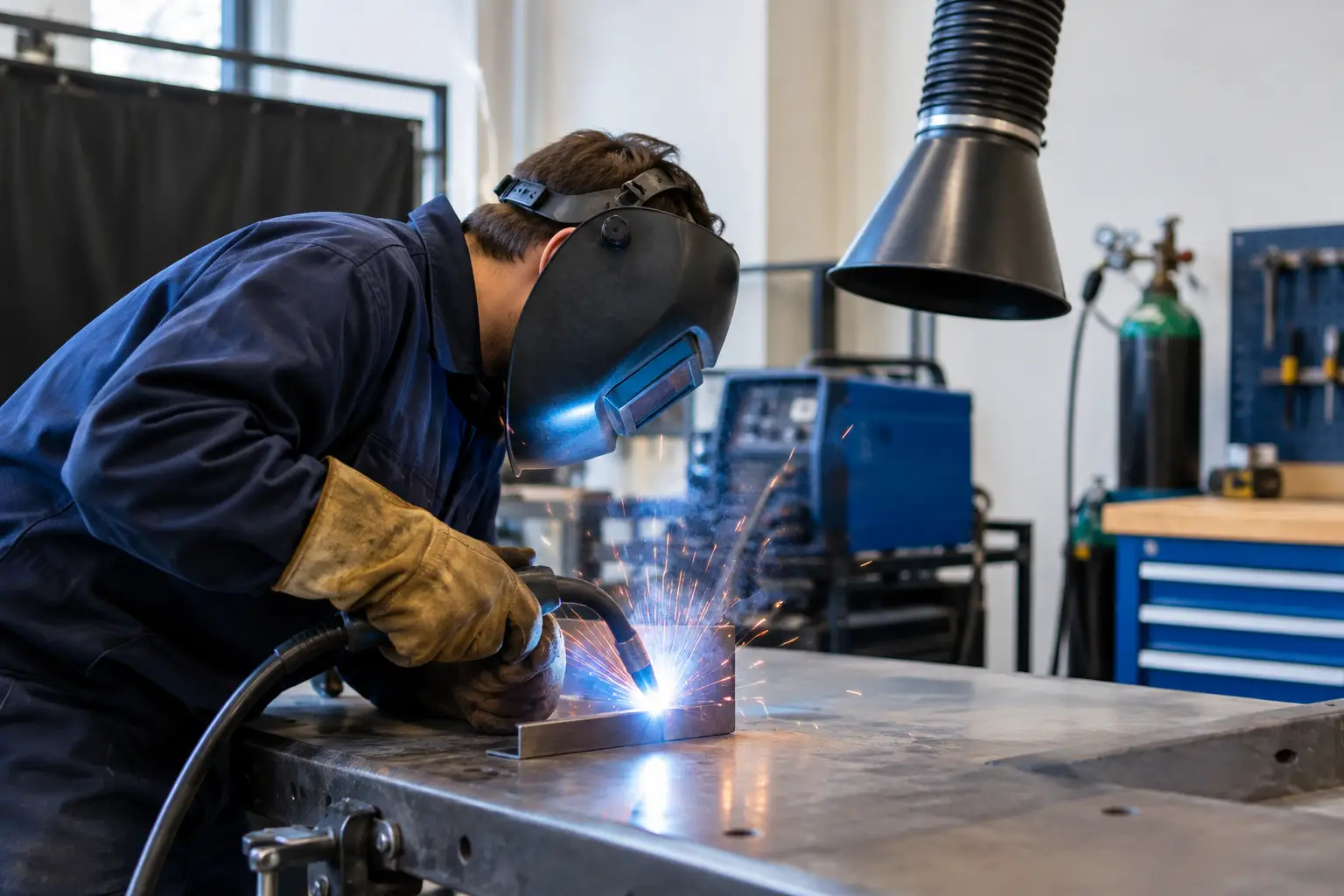
A cracked torch lead, a fume arm that will not hold position, and three students waiting for one working machine will quickly turn a practical lesson into lost teaching time. A college welding bay upgrade should fix those daily bottlenecks first, while giving learners a safe, professional environment that reflects the workshops they will enter after qualification.
The best upgrades are not built around buying the most expensive machines on the market. They are built around the courses being delivered, the number of learners in each group, the materials being welded and the college’s ability to maintain the equipment. Get those foundations right and the bay becomes safer, more productive and far easier for instructors to run.
Start the college welding bay upgrade with the teaching plan
Before specifying a single welder, look at the timetable. A bay used mainly for Level 1 and Level 2 training has different demands from one supporting advanced fabrication, coded welding preparation or apprenticeship programmes. Beginners need simple controls, clear set-up procedures and machines that tolerate the inevitable hard use of a busy teaching week. Advanced learners need process capability, consistent arc performance and enough adjustment to understand why parameter choice matters.
Count simultaneous users rather than total class size. If 16 learners attend but only eight can weld safely at once, the practical requirement is eight fully equipped stations, with well-planned rotation work for the remaining group. Trying to stretch too few bays across too many learners usually creates queues, rushed supervision and poor machine care.
Material also drives the specification. Mild steel training may call for straightforward MIG and MMA provision, while aluminium, stainless steel and pipe work bring TIG capability, gas management and more demanding cleaning standards into the picture. A mixed bay can be the right answer, but only if every process is properly supported with the correct torches, consumables and extraction arrangement.
Standardise where it saves time
For most colleges, standardising machine platforms is a sensible move. Similar controls, torches, consumables and spare parts reduce instructor familiarisation time and make fault finding simpler. It also helps students move between bays without needing to relearn basic machine operation.
That does not mean every station must be identical. A practical layout often combines dependable MIG machines for core training with dedicated TIG sets, MMA machines and plasma cutting equipment in controlled areas. The key is to avoid a collection of one-off machines with different leads, settings and consumable requirements simply because they were bought at different times.
Put fume control and compliance ahead of extra capacity
More welding positions are not an upgrade if the air quality suffers. Welding fume extraction needs to be considered at the same stage as the machines, screens and electrical supply. Retrofitting it later can mean awkward ducting, compromised capture points and added disruption during term time.
Local exhaust ventilation should capture fume close to the arc without getting in the way of the student or instructor. Flexible extraction arms work well where welding positions change, provided they are correctly sized, easy to position and regularly inspected. Downdraught benches can suit certain tasks, but they are not a blanket replacement for well-positioned source extraction, particularly on larger fabricated work.
A proper plan also considers air movement in the room. Strong draughts can pull shielding gas away from the weld and make fume capture less effective. Screens should protect adjacent learners from arc flash while still allowing supervisors a clear view across the bay. Emergency stops, fire points and clear access routes should remain visible and accessible, not hidden behind a new bank of equipment.
LEV testing and planned maintenance are part of the investment, not an optional extra after installation. Filters load up, arms get knocked out of position and gauges are ignored when workshops are under pressure. A documented inspection routine protects learners, staff and the college’s compliance position.
Specify power, gas and layout for real workshop use
Electrical capacity is often the limit nobody spots until equipment arrives. A bay may have enough sockets for legacy machines but not enough properly rated supply for several modern welding sets, plasma cutters and extraction units operating together. Have the incoming supply, distribution board, isolation points and circuit protection assessed before finalising the equipment list.
Three-phase equipment can make sense for higher-output welding and cutting, but single-phase machines may be more flexible for introductory bays or spaces with limited infrastructure. It depends on the work being taught and the building’s existing supply. Spending carefully on electrical work now is better than buying capable equipment that has to be run below its potential.
Gas cylinder storage and distribution need the same attention. Cylinders must be secured, protected from damage and kept out of traffic routes. For frequent MIG and TIG training, a properly planned gas supply arrangement can reduce manual handling and keep bays tidier. For lower-volume work, individual cylinders may be more economical and easier to manage. Either way, fit the right regulators, flashback protection where required and clearly identify gas lines.
Bench height, clamping provision and cable routing affect every lesson. Heavy-duty welding benches with replaceable surfaces and usable clamping points give students a better working standard than improvised tables. Keep torch leads and earth returns protected from sharp edges and foot traffic. A damaged return lead is not just untidy – it can lead to poor arc performance, overheating and avoidable downtime.
Buy equipment that teaches good habits
Training equipment has to survive more handling than a typical fabrication-shop machine. It will be adjusted by new users, moved between bays and occasionally used incorrectly. That is exactly why build quality, accessible controls and local technical backup matter.
For MIG training, choose machines with stable wire feed, clear voltage and wire-speed adjustment, and torches sized for the duty cycle. Digital displays can help learners record settings and repeat a successful weld, but the controls must remain understandable rather than becoming a barrier. Synergic MIG can be useful for guiding beginners towards workable parameters, while manual adjustment still has a place in teaching the relationship between voltage, wire speed, travel speed and bead profile.
TIG stations should provide reliable HF start where appropriate, a practical foot pedal option and torches that are comfortable enough for sustained practice. For MMA, durable electrode holders and good low-amp arc characteristics are more valuable than a long list of rarely used functions. Plasma cutters should be selected with consumable availability in mind, because frequent nozzle and electrode changes are part of student use.
Do not overlook the supporting kit. A welding bay works as a system, and a premium power source cannot compensate for poor-quality earth clamps, worn torches, incorrect liners or cheap consumables. Stock common contact tips, shrouds, liners, tungstens, collets, ceramic cups, electrodes and plasma consumables on site. This keeps sessions moving when something is damaged halfway through a lesson.
Make PPE provision simple and accountable
Shared PPE is common in education, but it needs a clear issue, inspection and replacement process. Auto-darkening welding helmets are often a worthwhile investment because students can see the work before striking the arc, which supports positioning and confidence. They still need suitable shade settings, clean lenses and regular checks.
Jackets, gloves, safety footwear, hearing protection and respiratory protection must match the tasks being undertaken. A single glove style is rarely ideal for MIG, TIG, grinding and hot material handling. Giving learners the right kit for each job reinforces the standards expected in industry.
Build storage into the bay design. Dry, labelled helmet and PPE storage prevents equipment being dropped on benches or left near grinding dust. It also makes missing items obvious before a class starts, rather than when an instructor is trying to get 20 learners safely underway.
Protect the budget with service and spares
The purchase price is only one part of a college welding bay upgrade. Downtime costs teaching hours, creates timetable pressure and can leave a department with equipment it cannot use. Ask how quickly repairs can be arranged, whether calibration support is available, and how readily consumables and common spares can be supplied.
A staged upgrade can be the sensible choice where budgets are tight. Start with extraction, electrical safety and the stations causing the most disruption, then standardise the remaining bays over planned phases. This approach avoids spreading a limited budget across too many compromises.
Linc-Weld can support colleges with equipment selection, workshop essentials, repairs, calibration and LEV testing, helping purchasing teams deal with one specialist supplier rather than chasing separate providers for machines, consumables and after-sales support.
Before signing off the project, involve the instructors who will use the bay every day. Their view on access, supervision, common faults and course requirements will expose details a specification sheet cannot. Build a bay that makes safe, repeatable practical training easier, and each cohort leaves with habits that belong on a professional workshop floor.