
Choosing a College Welding Equipment Supplier

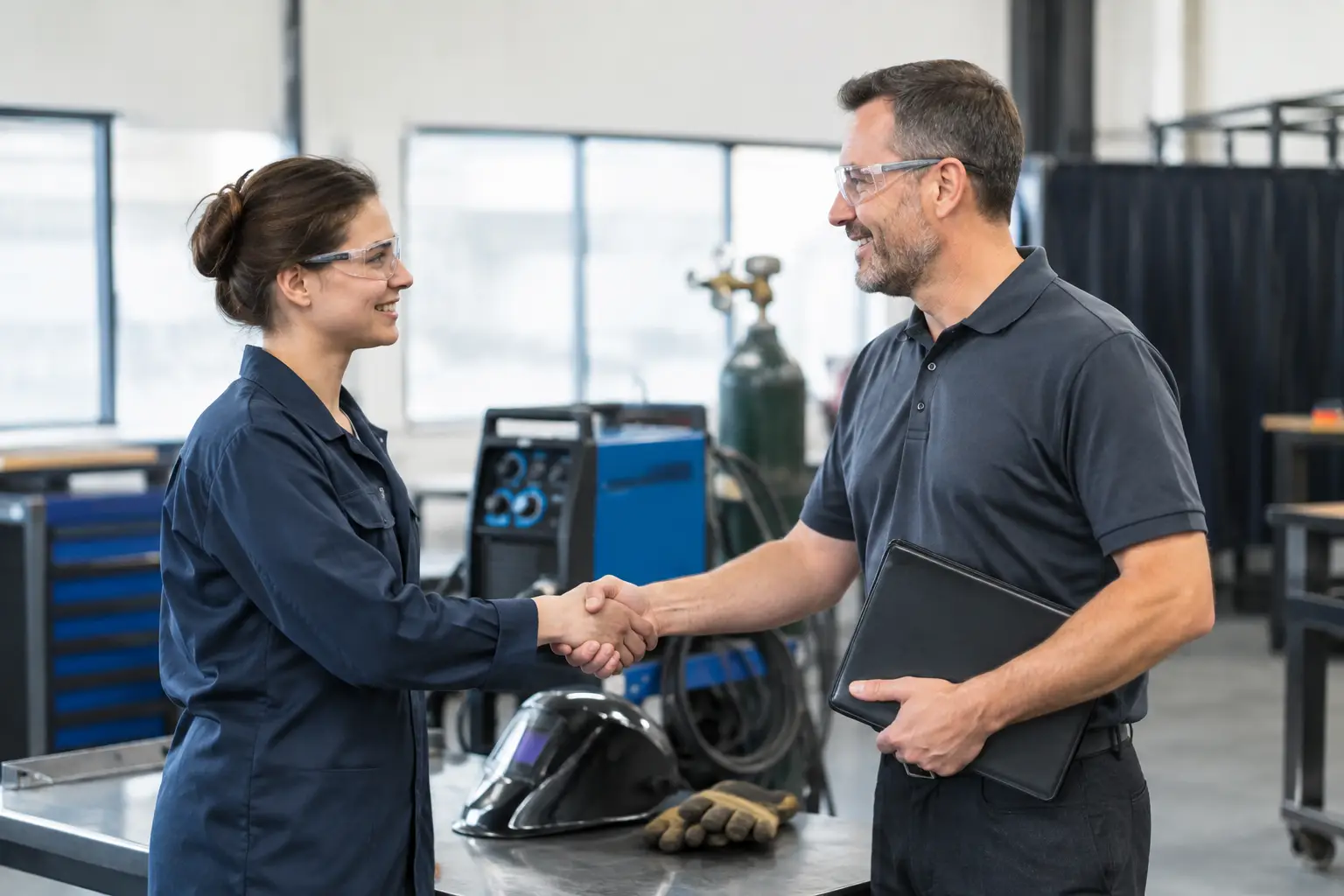
A college welding equipment supplier does more than deliver a few machines before term starts. The right supplier helps a training department keep every bay working, every learner protected and every practical session on schedule. When machines are down, consumables do not match the torches, or PPE stock runs short, teaching time disappears quickly.
For colleges training the next generation of welders, the buying decision needs to cover far more than headline machine price. Equipment must stand up to repeated use by learners, remain straightforward for instructors to supervise and reflect the processes employers expect apprentices to understand on day one.
What colleges need from a welding equipment supplier
A commercial fabrication shop may buy around a specific production job. A college has a different brief. It needs equipment that can teach sound technique across a mixed range of ability levels, from a first fillet weld through to coded-welding preparation and advanced TIG work.
That calls for a supplier that understands the full workshop, not just a single machine category. MIG, TIG, MMA and plasma cutting equipment all need to work alongside compatible torches, earth leads, regulators, wire, filler rods, electrodes, abrasives, extraction and PPE. Buying these items separately from several sources can appear cheaper at first, but it creates delays, compatibility questions and unnecessary administration.
A specialist supplier can help departments build a practical, repeatable setup across bays. That means similar controls where appropriate, sensible duty cycles, clear consumable specification and equipment that instructors can set up without losing half a lesson to menus or missing parts.
Training-ready machines are not always the cheapest machines
Entry-level welders benefit from stable arcs, understandable controls and reliable wire feeding. A machine that is difficult to strike or constantly trips out does not teach good practice. It teaches frustration.
This does not mean every booth needs the most expensive inverter available. The right level depends on the course, likely materials, class sizes and the skills being assessed. For introductory work, dependable MIG sets with practical adjustment ranges may be the sensible choice. For engineering, motorsport or aerospace pathways, AC/DC TIG capability, pulse settings and more precise control can justify the higher spend.
The key is to specify for the curriculum and expected use, rather than buying solely on amperage or a short-term promotional price. A supplier should be able to discuss duty cycle, input supply, torch type, wire-feed performance, generator suitability where relevant and the availability of replacement parts.
Build the workshop around the processes you teach
A well-equipped welding area should give learners experience of the processes they are likely to see in industry. The balance will vary, but most colleges need a core range that supports MIG/MAG, TIG and MMA welding, alongside thermal cutting and preparation work.
MIG/MAG remains central for general fabrication training. Machines should be capable of running common wire sizes consistently, with accessible settings for mild steel and, where the syllabus requires it, stainless or aluminium. Synergic models can be useful in training environments because they provide a workable starting point, but instructors still need learners to understand voltage, wire speed and travel speed rather than relying blindly on a programme.
TIG equipment should match the material work. DC TIG is suitable for steel and stainless applications; AC/DC TIG is needed where aluminium training is part of the course. Foot pedals, quality torches and proper gas control matter here. Cheap accessories can make a capable machine feel poor in a learner’s hands.
MMA sets remain valuable for site welding, repair work and outdoor applications. They are also a practical way to teach arc control, electrode selection and positional welding. Plasma cutters add another useful capability, particularly where students need to prepare plate accurately without relying entirely on manual oxy-fuel cutting.
Do not overlook induction heating, portable bevelling tools and cobot welding systems where the department serves higher-level engineering courses or local employers. They are not essential for every workshop, but modern equipment can help colleges demonstrate the direction of industrial welding without turning the shop into a showroom of rarely used kit.
Safety, extraction and PPE cannot be an afterthought
The welding bay is only as good as its safety provision. Colleges have a particular responsibility because many learners are inexperienced, working at pace and still forming habits that will follow them into employment.
PPE needs to be properly sized, readily available and suitable for the process. Auto-darkening helmets, welding gauntlets, flame-resistant jackets, safety footwear, respiratory protection, safety glasses and hearing protection all need to be considered. It is worth standardising reliable helmet and glove ranges where possible, as instructors can demonstrate their use consistently and stores teams can hold simpler stock.
Fume control deserves the same attention as welding power sources. Local exhaust ventilation must be suitable for the bay layout, the welding processes and the volume of use. LEV testing and ongoing maintenance are not optional paperwork exercises. They are central to protecting students, staff and visitors.
A capable college welding equipment supplier should support the wider compliance picture, including extraction requirements, machine safety checks and practical advice on keeping work areas clean and usable. A workshop full of new machines is not a successful installation if extraction arms are poorly positioned or students cannot access the controls safely.
Consumables decide whether practical lessons run smoothly
Wire, gas, electrodes, tungsten, ceramic cups, contact tips, liners, cutting consumables and abrasives are everyday workshop requirements. Yet they are often ordered reactively, when the class is already waiting.
A better approach is to agree regular stock lines and reorder levels. Keep the consumables matched to each machine and process, with clear labelling for learners and technicians. For example, the contact tips, liners and drive rollers fitted to a MIG set must suit the wire being used. Small mismatches cause feeding issues that can be mistaken for a machine fault.
It pays to hold sensible spares for high-wear components, especially on equipment used across several classes each week. Torches, consumable kits, earth clamps and regulators are not glamorous purchases, but their failure can stop an entire session.
Price matters, of course. But the cheapest compatible-looking part is not always a saving if it performs poorly, does not fit correctly or needs replacing twice as often. Trusted brands and properly specified consumables give instructors one less variable to troubleshoot.
Service support matters after delivery
A delivery is the beginning of the relationship, not the end. Colleges need support when a machine develops a fault, a calibration date approaches, an extraction system needs testing or a technician requires guidance on setup.
Before choosing a supplier, ask what happens after the order is placed. Can they arrange repairs? Is there an engineer available for urgent callouts? Can they calibrate relevant equipment and help identify faults before a machine is sent away? Are demonstrations available so staff can get the best from unfamiliar equipment?
Fast UK delivery is valuable, but it is only part of the offer. The stronger choice is a supplier with stock depth, technical knowledge and practical service capability. Linc-Weld supports colleges with premium welding gear, workshop essentials and the engineering backup required to keep training moving.
Questions worth asking before you buy
Ask for recommendations based on your qualification routes, class numbers, power supply and workshop layout. Confirm the lead time for machines, torches, consumables and replacement parts. Check whether the supplier can support planned maintenance, repairs and LEV testing, not just the initial sale.
Also consider standardisation. A department does not have to use one brand for everything, but limiting unnecessary variation makes life easier for instructors, technicians and learners. Shared torches, common consumables and familiar machine controls reduce setup time and simplify fault finding.
Buy for the learners you are preparing
The best equipment choice is not necessarily the largest order or the lowest quote. It is the setup that gives students safe, repeatable practice on equipment that reflects real working conditions, while giving staff dependable support when the workshop is under pressure.
Choose equipment that earns its place at the bench, stock the consumables that keep it running and work with people who can answer technical questions without passing you from department to department. That gives learners more time under the hood and a stronger start in the trade.